
A smoothie can be one of the healthiest things you drink all day, or it can be a simulation to be healthy food. The difference is all about what you put in the blender.
That’s the part most articles skip. They either tell you smoothies are a mystery or warn you they’re sugar bombs. Both can be true. So instead of picking a side, let’s look at what actually happens when you blend your food, when a smoothie can stand in for a real meal, and how to build one that keeps you full without wrecking your day.
Are smoothies good for you or bad for you?
A smoothie made with whole fruit, vegetables, a protein source, and a little healthy fat is genuinely good for you. A smoothie made with fruit juice, frozen yoghurt, honey, and three bananas is closer to a milkshake.
The drink itself is neutral. It’s the recipe that decides whether you’re drinking a meal or a treat. So the better question isn’t “Are smoothies healthy?” — it’s “Is this smoothie healthy?”
The biggest smoothie myth: “Blending destroys fibre.”
You’ve probably read that blending fruit destroys its fibre. It’s repeated everywhere, and it’s wrong.
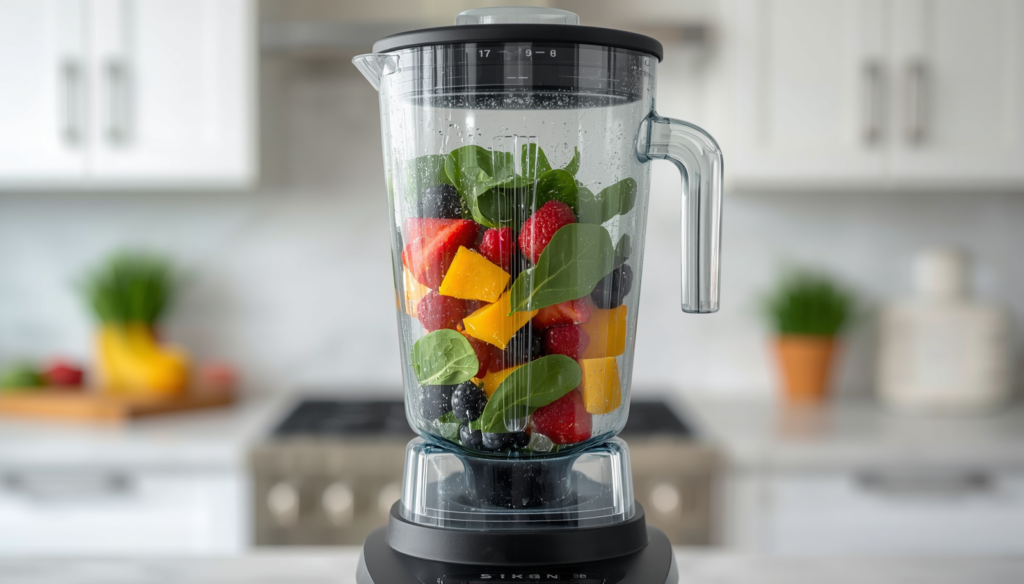
When you blend whole fruit, the fiber stays in the glass. The only time you lose fiber is when you juice — because juicing strains out the pulp and throws it away. That pulp is where most of the fiber lives. As Johns Hopkins Medicine puts it plainly, blending doesn’t break down nutrients enough to reduce their value, and tossing whole produce in a blender gives you better nutrition than juicing.
So if a smoothie keeps its fiber, why do health experts still say whole fruit is slightly better?
What blending actually does
Blending breaks open the cell walls inside fruit. When those walls break, the natural sugars trapped inside are released and become what the NHS and British Heart Foundation call “free sugars” — the same category as added sugar. The fiber is still there, but the sugar is now easier and faster for your body to absorb.
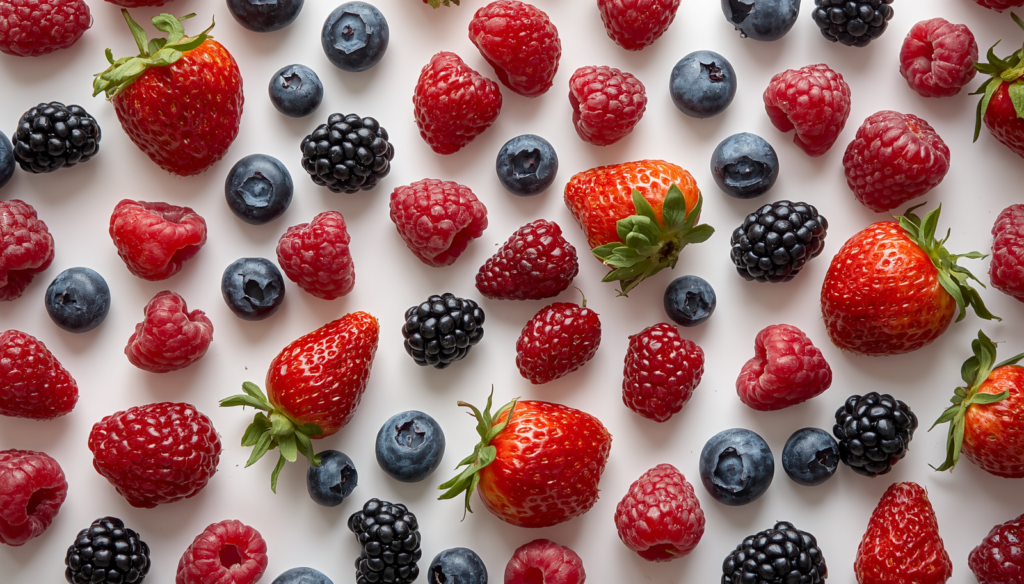
That’s the real trade-off. Not “fibre gone”, but “sugar absorbed faster”. It’s a meaningful difference, but a small one — and one you can manage by what else you add to the smoothie (more on that below).
There’s even a twist in the smoothie’s favour. Blending fruits that contain tiny seeds, like raspberries and blackberries, can release fiber from those seeds that you’d normally swallow whole and never digest. Some research has found that this can actually lower the blood-sugar response compared with eating the fruit whole.
Smoothie vs juice vs whole fruit
| Fiber | Sugar speed | Best for | |
| Whole fruit | Highest, fully intact | Slowest to absorb | Every day eating and blood sugar control |
| Smoothie (blended whole fruit) | Kept (pulp stays in) | Faster than whole fruit | A fast meal or snack with lots of produce |
| Juice | Mostly removed | Fastest spike | Occasional treat, not a fruit replacement |
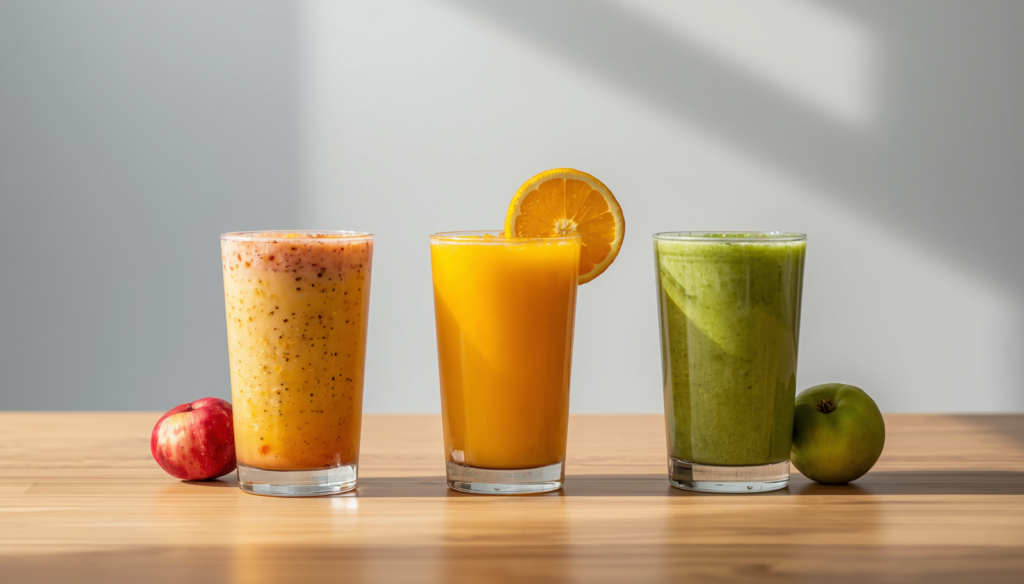
The takeaway: a smoothie sits much closer to a whole fruit than to juice. If you were choosing between juice and a smoothie, the smoothie wins almost every time.
Real benefits of drinking fruit smoothies
For most people, the upside is simple: smoothies make it easy to eat food you’d otherwise skip.
- You hit your fruit and veg targets. Most adults fall short. One smoothie can hold two to three servings of produce, including vegetables you’d never eat on their own. A handful of spinach disappears completely behind a banana.
- You get more fiber. The USDA suggests 25–38 grams of fiber a day, and the average person manages only about half that. A smoothie with fruit, oats, and seeds closes a lot of that gap.
- They’re fast. A real, balanced meal in two minutes is hard to beat on a busy morning.
- They’re flexible. You control every ingredient, which means you control the sugar, the calories, and the nutrition.
That last point is the whole game. A homemade smoothie is only as healthy as the choices you make building it.
The downsides nobody wants to admit
Smoothies have real weak spots. Knowing them is how you avoid them.
Sugar and blood-sugar spikes
Because blending releases free sugars, a fruit-heavy smoothie can raise your blood sugar faster than the same fruit eaten whole. If you have diabetes or watch your blood sugar, this matters. The fix isn’t to give up smoothies; it’s to add protein, fiber, and fat, which slow sugar absorption, and to lean on vegetables and lower-sugar fruits like berries instead of piling in juice and bananas.
Calories and portion size
This is the quiet problem. Store-bought smoothies often come in 16 to 32-ounce sizes, and a large one can carry as many calories as a full meal, sometimes more. A good gut check from dietitians: imagine pouring your smoothie out onto a plate. If the food on that plate looks like too much to eat in one sitting, your smoothie is too big.
Liquid calories and fullness
Drinking calories doesn’t always fill you up the way chewing does. If you drink a 500-calorie smoothie alongside lunch instead of it, you can easily overeat without realising. Smoothies work best as a replacement, not an extra.
Can a smoothie replace a meal?
Yes, a smoothie can replace a meal, but only if it’s built like one. A meal isn’t just calories; it’s a balance of nutrients that keeps you full and steady for a few hours. A glass of blended fruit and juice doesn’t do that. It spikes, then leaves you hungry an hour later.
What turns a smoothie into a real meal
A meal-substitute smoothie needs four things working together:
- Protein — Greek yogurt, milk, protein powder, silken tofu, or even cottage cheese. This is what keeps you full.
- Fiber — fruit, vegetables, oats, chia, or flax. Slows digestion and feeds your gut.
- Healthy fat — nut butter, avocado, or seeds. Adds staying power and helps absorb nutrients.
- Complex carbs — oats, bananas, or berries for steady energy instead of a sugar spike.
Plus a liquid to blend (water, milk, or unsweetened plant milk). Miss the protein and fat, and you’ve made a snack, not a meal — that’s the single most common mistake.
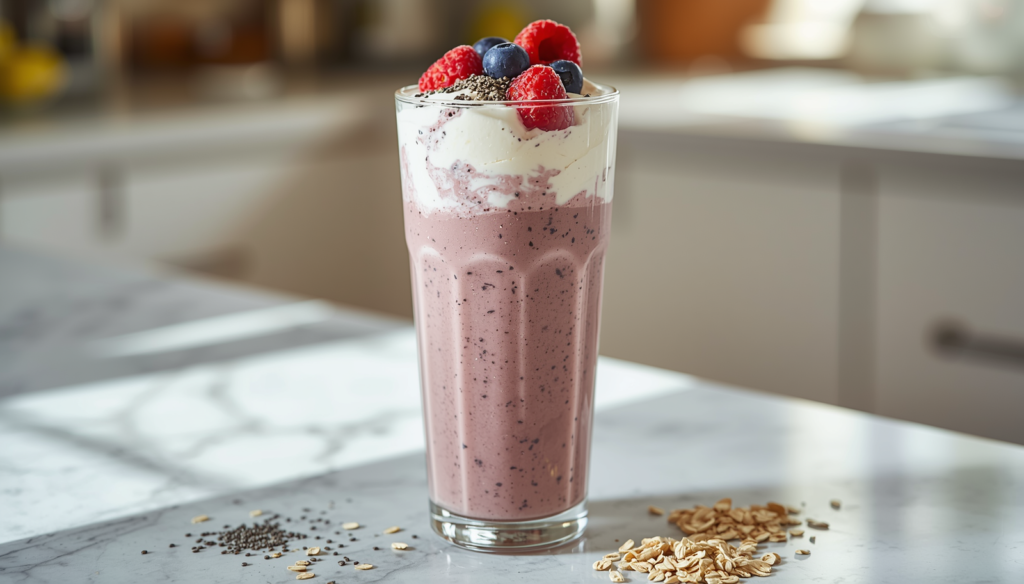
A simple meal-substitute smoothie template
Use this as a base and swap ingredients to taste:
| Component | Pick one or two | Rough target |
| Liquid | Milk, unsweetened almond/oat milk, water | 1 cup |
| Protein | Greek yogurt, protein powder, silken tofu | 20–30 g protein |
| Fruit | Berries, half a banana, mango | 1 cup |
| Vegetable | Spinach, kale, cauliflower | 1–2 handfuls |
| Healthy fat | Nut butter, chia, flax, avocado | 1–2 tbsp |
| Complex carb | Rolled oats | 2–3 tbsp |
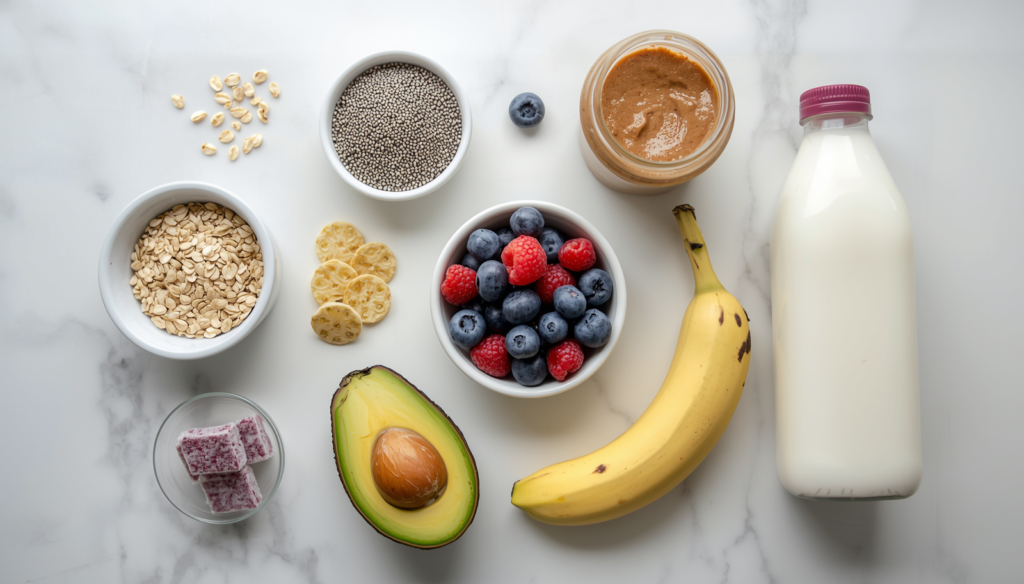
Example: 1 cup milk + 1 scoop protein powder + 1 cup frozen berries + a handful of spinach + 1 tablespoon peanut butter + 2 tablespoons oats. That lands around 350–450 calories with real protein, fiber, and fat – a meal that holds you, not a sugar rush.
A quick honesty note: a well-built smoothie can replace a meal now and then, but it shouldn’t replace every meal. Chewing real food matters for fullness and digestion, and no blender mix beats a varied plate over the long run. If you’re using smoothies to manage a medical condition or replace meals daily, check in with a registered dietitian first.
Is a smoothie a healthy breakfast?
It can be a very good one if it’s built like a meal, not a dessert. A breakfast smoothie with protein and fiber will keep you going until lunch. A breakfast smoothie that’s just fruit and juice will leave you reaching for a snack by mid-morning, and you’ll have spiked your blood sugar first thing in the day.
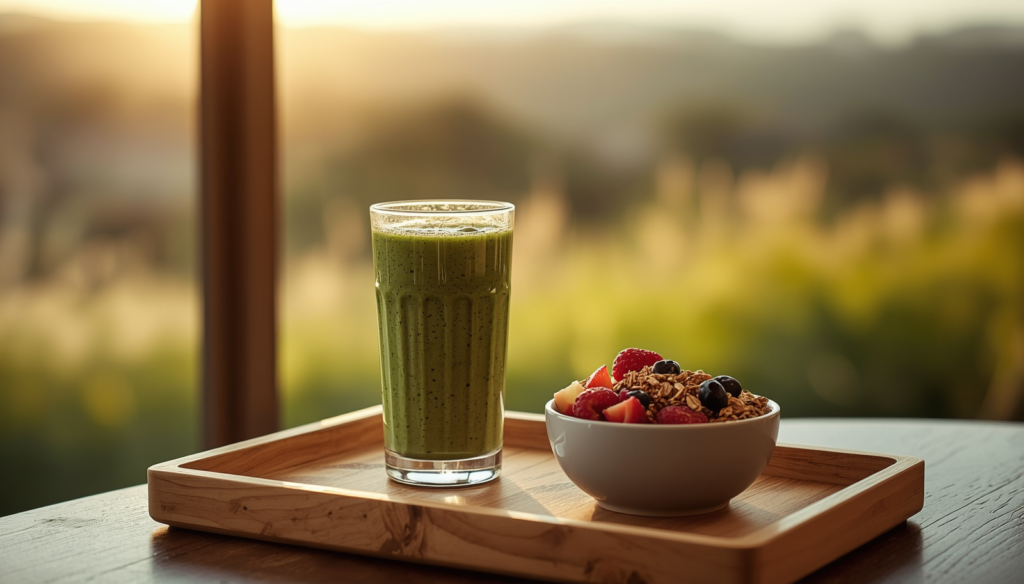
One small habit worth knowing: the NHS recommends drinking smoothies and juice with a meal rather than sipping them between meals, partly to protect your teeth from the fruit acids. So a breakfast smoothie at the table beats one sipped slowly at your desk all morning.
Homemade vs store-bought smoothies:
If you only change one thing, make your smoothies at home.
| Homemade | Store-bought / bottled | |
| Sugar | You control it | Often high, with added juice or syrup |
| Fiber | Usually higher | Sometimes strained or juice-based |
| Portion | Your choice | Frequently oversized |
| Cost | Cheaper per serving | More expensive |
| Protein/fat | Easy to add | Often missing |
Store-bought smoothies aren’t automatically bad, but many are built for taste, not nutrition — heavy on fruit juice and added sugar, light on protein. If you buy one, check the label and treat a large size as a meal, not a drink.
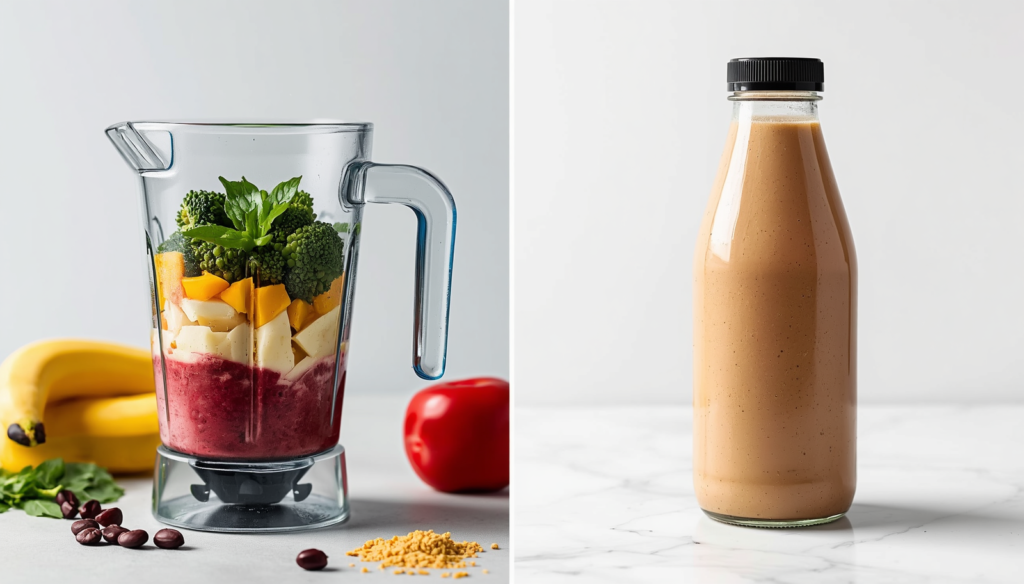
Mistakes that turn a healthy smoothie into junk food
- Using fruit juice as the base. It piles on free sugar with little fiber. Use water or milk.
- No protein or fat. Without them, you’ve made a snack that won’t keep you full.
- Too much fruit. Two or three fruits plus juice plus honey adds up fast. One to one-and-a-half cups of fruit is plenty.
- Adding sweeteners. Honey, maple syrup, sweetened yogurt, and dates stack sugar on top of already-sweet fruit.
- Making it huge. A 32-ounce smoothie is often two meals. Match the size to your hunger.
- Drinking it on top of a meal. Replace, don’t add.
How to make a smoothie that’s actually good for you
Build it like a plate. Start with a protein, add a vegetable you won’t taste, use one to one-and-a-half cups of fruit (lean on berries), add a spoon of healthy fat and some oats for staying power, and blend with water or unsweetened milk. Skip the juice and the syrup. Keep the size sensible.
Do that, and you’ve made one of the easiest, most nutrient-dense meals there is — fiber intact, sugar in check, and enough protein to actually keep you full.
The verdict
Smoothies are not inherently healthy or unhealthy. A homemade smoothie, a whole fruit, vegetable, protein and fibre, is a truly smart meal substitute, nutritionally close to whole fruit, easy to digest and quick to make. A juice-and-sugar smoothie is a treat, and there’s nothing wrong with that, provided you call it as it is.
Get the formula right: protein, fibre, healthy fat, complex carbs, a reasonable size, and a meal-replacement smoothie earn their way into your routine.
7. FAQs
Are fruit smoothies bad for you? Not on their own. Fruit smoothies keep their fiber and pack in nutrients. They become a problem when they’re loaded with juice, added sugar, or made in giant portions. Build them with whole fruit, add protein, and watch the size.
Can a smoothie replace a meal? Yes, if it contains protein, fiber, healthy fat, and complex carbs. Those four together keep you full and steady. A smoothie of only fruit and juice is a snack, not a meal.
Are smoothies good for weight loss? They can help because they let you control calories and feel full on fiber and protein. They backfire if they’re oversized or drunk in addition to your meals rather than instead of one meal.
Is a smoothie a healthy breakfast? A balanced one is – with protein and fiber it will keep you full until lunch. A fruit-only breakfast smoothie spikes blood sugar and leaves you hungry quickly.
Is a fruit smoothie fattening? Only if you overpour. A sensible 350–450 calorie smoothie is just a meal. A 700-calorie smoothie on top of normal meals will add up. Portion is everything.
Does blending fruit destroy the fiber? No. Blending keeps the fiber because the pulp stays in the glass. Only juicing removes fiber. Blending does release natural sugars more quickly, but the fiber remains intact.
What should I put in a meal-replacement smoothie? A liquid (milk or water), a protein (Greek yoghurt or protein powder), fruit, a vegetable, a healthy fat (nut butter or seeds), and a complex carb like oats.
Are homemade smoothies healthier than store-bought? Usually, yes. At home, you control the sugar, the portion, and the protein. Many store-bought smoothies are juice-heavy, oversized, and low in protein.
Note: This article is general information, not personal medical or dietary advice. For specific health conditions, such as diabetes, consult a registered dietitian or your doctor.