I first worked with an intensely flavored French Raspberry Tart recipe in my early baking days. It felt easy to make, yet rich in detail and skill. Over time, I came to truly love the careful combination of flavors it brings.
The base gives a soft crunch that contrasts with the filling. A well-made tart crust supports a smooth and creamy layer. The hint of vanilla adds a gentle depth and a pleasant mouthfeel.
Inside, the pastry is filled with delicate cream. The balance of sweet notes and slight tartness from the raspberry feels just right. Each bite is rewarding, and one slice never feels like enough.
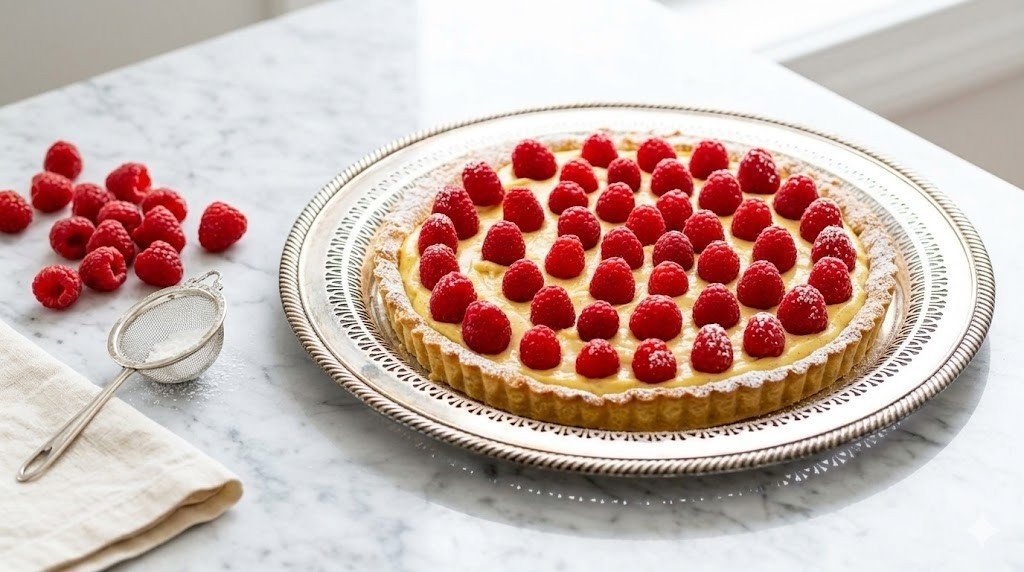
When serving, I always focus on presentation. The tart is often topped with stunning raspberries placed with care. They look shimmering, like giant rubies, full of natural shine.
This visual detail adds real beauty to the dessert. From kitchen to table, it feels both simple and refined. That balance is what makes this tart memorable.
Let’s Talk About the Topic:
French Raspberry Tart Components
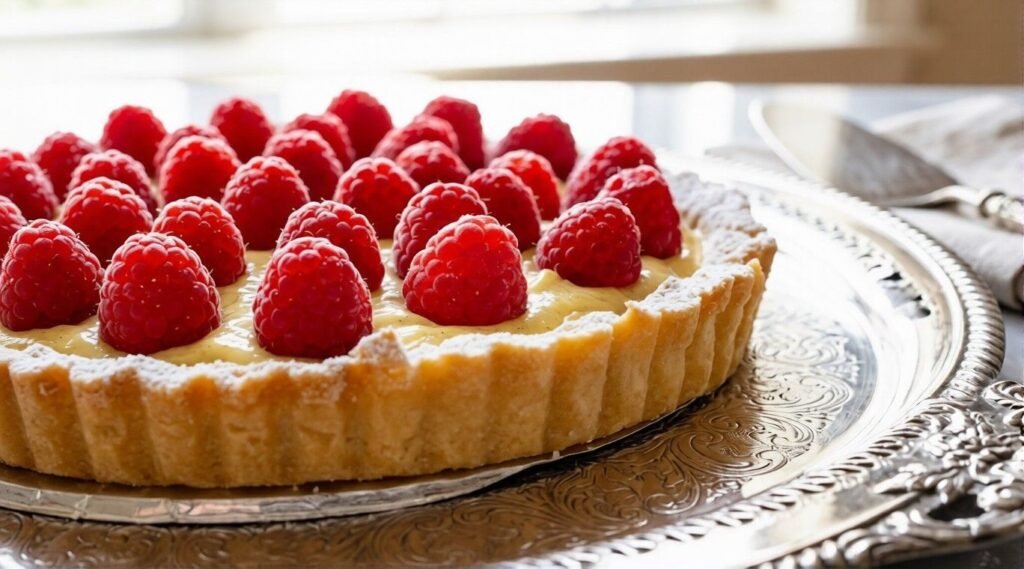
Working with a French Raspberry tart becomes much simpler when you plan. From my experience, the secret is keeping all components ready before you start. This approach makes the tart feel easy, even at the last minute.
The base starts with a firm, tart crust and smooth pastry filling. Once both parts are ready, the tart comes together quickly. I often prepare a slice, then just add fresh raspberries and enjoy.
For the filling, I rely on Pastry Cream, also called Crema Pasticcera or Crème Pâtissière. It takes about 20 minutes to make, best done a day before. Keeping it in the fridge helps the texture thicken and the vanilla flavor deepen overnight.
You can store it up to 3 days ahead without losing quality. For the base, the Tart Crust needs about 15 min prep and around 1.5 hr rest. Having both parts prepared early gives better control and smoother results.
House Favorite Pastry Cream Filling
In my kitchen, the filling starts with Crème Pâtissière, known for its creamy and luscious texture. The smooth mouthfeel comes from a balanced mix of vanilla and rich pastry cream. This recipe has been my favorite, proven by the test of time.
It takes only 20 minutes to make, but planning matters. I always prepare it a day before and store it in the fridge. Resting it overnight keeps it cold and helps the flavors deepen.
For structure, I pair it with a Tart Crust that is homemade and sweet. A classic pâte sucrée gives a shortbread-like cookie crust. I usually prepare it ahead of time to save time during assembly. If needed, a ready-made option can still work with good quality.
I prefer butter-based puff pastry dough that does not need a blind-bake. Some gourmet groceries carry excellent options for quick use. Still, making it from scratch feels like a real upgrade over store-bought. It keeps the process easy while letting you prepare everything with control.
Raspberries
When working on a French Raspberry Tart, I always focus on fruit quality first. The Peak raspberry season falls in summer, from June to August. This is the perfect time to make a cold and refreshing tart.
I usually choose plump and ripe raspberries with care. They should feel slightly firm, not overly soft from over-ripe stages. Good selection during picking makes a clear difference in taste.
After buying, I always store them in the fridge right away. They do not ripen further once removed from the plant. Keeping them cool helps maintain their texture and freshness.
Interestingly, these berries are quite ancient in origin. For a long time, people have been enjoying them across the Mediterranean. That history adds a quiet depth to every tart I prepare.
Recommended Variations
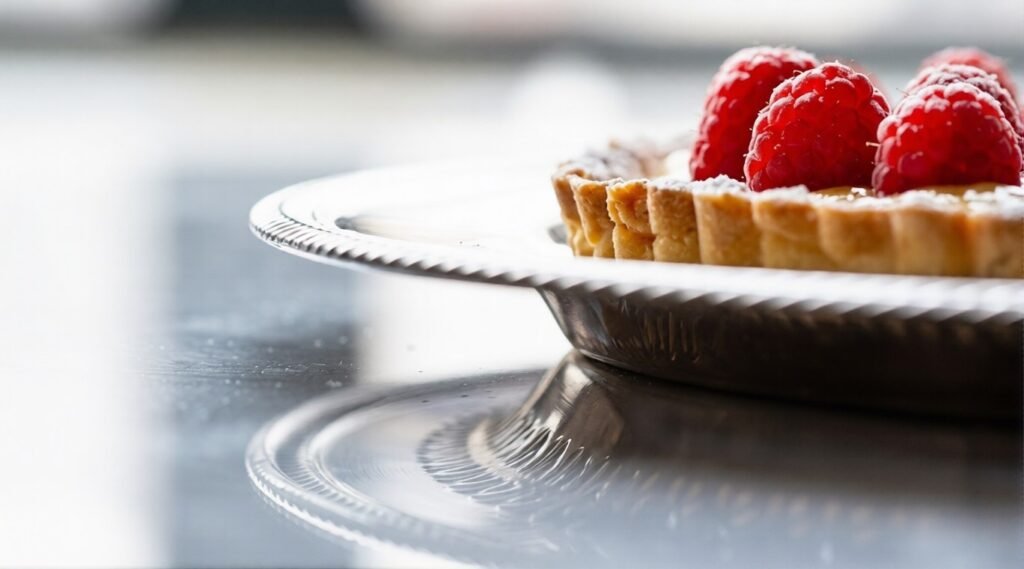
Once you understand the base tart, trying new fruits becomes an excellent way to grow your skills. I often use Strawberries as a simple variation of the tart for a fresh twist. With a sweet tart crust, the shortcrust creates an elegant feel every time. This version reminds me of classic strawberry shortcake served in pastry form.
For a lighter and more vibrant option, I like using Fresh Blueberries on top. You can glaze them for shine or keep them unglazed for a natural finish. A gentle sprinkle of lemon or lime zest brings a clean citrus note. These small details help balance the sweetness and keep the tart refreshing.
To refine the presentation, I often garnish with a sprig of mint. This adds a subtle aroma and a cool contrast to the fruit. From a professional view, these touches improve both taste and visual appeal. They also make the tart feel more complete without extra effort.
When I want something richer, I turn to bananas for a softer texture. I slice the bananas at the last moment to keep them fresh. Then I glaze lightly and serve while the flavors are at their best. The mix of soft fruit and base crunch feels like banana pudding in tart form.
Assembling your French Raspberry Tart
At this stage, everything comes together calmly and simply. I usually assemble the tart only when all parts are ready and well chilled. Start by taking the cold filling and gently spreading it evenly. The smooth layer of pastry cream should sit neatly inside.
Next, place it over the pre-baked base with care. A firm crust helps hold the structure without breaking. Once set, begin to top it with fresh berries in a clean pattern. This step is where the tart starts to look complete.
You can choose to glaze the surface for a glossy finish. In many kitchens, this step stays optional depending on style. Sometimes the glazing is skipped if the fruit already looks perfect. That choice is often part of a chef’s personal touch.
From my experience, keeping this final part simple works best. Clean layers and fresh fruit speak for themselves. It’s less about adding more and more and more about balance. That restraint is what makes the tart feel refined.
A Quick Glaze to give your French Raspberry Tart Shine
Once the tart is assembled, I like to add a light finish for a polished look. A quick glaze can bring out the color of the raspberries. It adds a soft shine without changing the natural taste too much. This step is simple but makes a visible difference.
You can use jam or marmalade, depending on what you have. Both options work well and blend smoothly with the fruit. In my kitchen, I follow very basic instructions to keep it easy. The goal is to enhance, not overpower, the tart.
This small step fits into the overall recipe without extra effort. It takes about 5 minutes to make, so it never feels like a burden. I often do it just before serving for the best look. That timing keeps the fruit fresh and bright.
From experience, this final touch improves the presentation a lot. The glossy top makes the tart look more refined. Even simple desserts feel elevated with this step. It’s a small detail that adds professional quality.
Serving
At the final stage, presentation becomes just as important as taste. I like to keep things simple and clean when the tart is ready. A light touch can make the dessert feel complete. This is where small details start to matter.
I gently sprinkle a thin layer of powdered sugar on top. It often falls softly around the edges, creating a neat frame. This step adds a subtle sweetness without overpowering the fruit. It also gives a refined look with very little effort.
From my experience, less is always better at this point. Once finished, the tart is fully ready to serve. I prefer to cut and present it fresh for the best texture. That moment always feels rewarding after careful preparation.
Storage and Freshness
After preparing a French Raspberry Tart, keeping it at its best matters a lot. The raspberries and crema pasticcera filling taste best when fresh. From my experience, it’s always better to enjoy the tart sooner rather than later. The texture and flavor are at their peak right after serving.
You should plan to finish it within 2 to 3 days for the best result. I always place the tart in the fridge right after serving. Make sure it is properly covered to protect the surface and flavor. This helps keep the cream stable and the fruit from drying out.
Freezing is not ideal for this dessert. The tart does not hold its texture well once it is frozen. In my kitchen, I avoid this step to maintain quality. A fresh serving always gives a better experience.
If you ever have extra, it’s best to share. Someone will always be happy to help finish a good tart. That way, nothing goes to waste, and the dessert is fully enjoyed.
Let’s Talk About the Recipe:
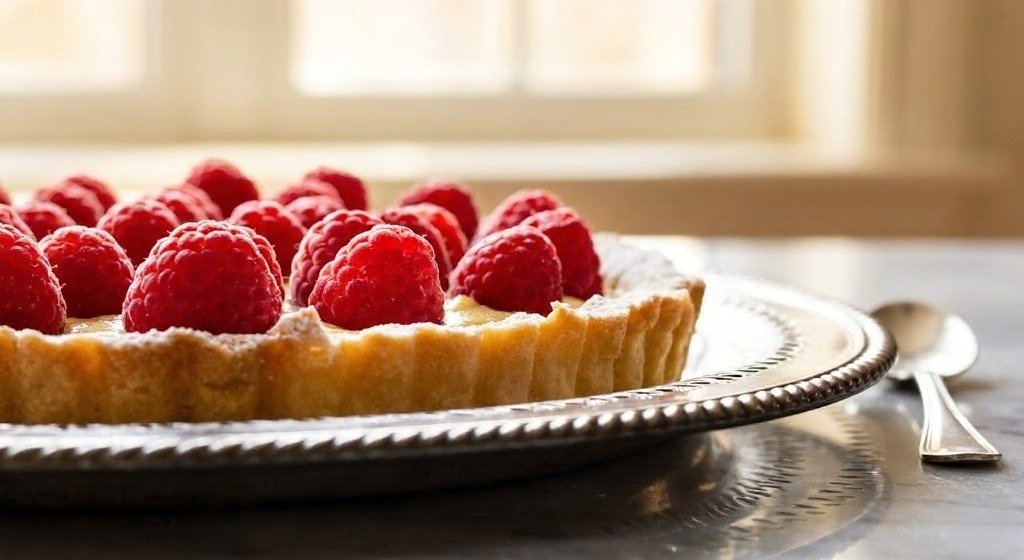
Ingredients of French Raspberry Tart
After discussing the base idea of this dessert, I always move straight to what really shapes it: the ingredients. In my kitchen, I focus on balance and texture first. A good tart depends more on selection than technique. Even small choices change the final taste.
For the base, I use a 1-round tart pan, about 9.5 inches or 24 cm wide. A Sweet Tart Crust recipe works best, but I sometimes roll out ready-made butter puff pastry dough. Fit it gently into a tart tin, following the package instructions. Prick it with a fork to let air escape through small holes.
The filling is where it becomes classic. I prepare a smooth Pastry Cream, also known as Crème Pâtissière. Use 2 cups or 500 ml, which is about 6 oz per serving layer. I always cook it slowly to keep it silky. This step reflects real pastry training and patience.
For the fruit, choose fresh raspberries that are washed and fully dry. I place them on a paper towel before using them. This prevents extra moisture from ruining the texture. In my experience, this small habit makes a big difference.
To finish, add a light touch of powdered sugar for an optional dusting. It should never overpower the fruit. I keep it minimal so the natural flavor stands out. This is how I was taught, and it always works.
Glaze (optional)
When finishing a French Raspberry Tart, I sometimes add a light glaze for shine. This step is optional, but it helps the fruit look more polished. A simple mix using ⅓ cup or about 5 Tbsp works well. It adds a gentle coating without changing the flavor too much.
I often choose red currant jelly for a clear and smooth finish. At times, I switch to apple or apricot jam for a softer tone. Each option blends well with the tart without overpowering it. The goal is to keep the topping balanced and natural.
It’s best to use a light-colored fruit spread for this step. You can also use marmalade if you prefer a slight citrus note. From my experience, warming it slightly makes it easier to apply. This keeps the glaze thin and even across the surface.
Instructions
From my experience, good planning makes the process smooth. Start by working Make Ahead to stay organized. Always pre-bake the tart crust using a trusted Sweet Tart Crust Recipe. I usually do this a day ahead to save time later.
Next, prepare the filling with a classic pastry cream. Follow a proper Pastry Cream Recipe so the flavors can develop well. Let it rest for at least 4 hours and refrigerate before use. This step gives the tart a smooth and stable texture.
When ready to build, assemble and serve with care. Gently spread the cream inside the tart shell. Then, arrange the raspberries evenly on top of the cream. This creates a clean and balanced finish.
For a glossy look, you can glaze the Tart as an optional step. Lightly Heat jam or jelly over medium heat, while stirring. Once it turns into a smooth liquid, after about 3 to 4 minutes, it’s ready. If needed, strain through a sieve and let it cool slightly.
Finally, brush a thin layer of glaze over the fruit. Keep the coating light so it does not overpower the taste. This step adds shine while keeping the tart fresh. Handled this way, the result feels both simple and refined.
FAQ’s
Q. What is a French Raspberry Tart?
Ans: It is a classic dessert made with a crisp tart crust, creamy pastry filling, and fresh raspberries on top.
Q. What type of crust is used in this tart?
Ans: A sweet tart crust, often pâte sucrée, is used for its shortbread-like texture.
Q. What is the filling made of?
Ans: The filling is made from pastry cream (Crème Pâtissière), which is smooth, rich, and lightly flavored with vanilla.
Q. Can I prepare the components in advance?
Ans: Yes, both the crust and pastry cream can be made ahead to save time and improve flavor.
Q. How long can pastry cream be stored?
Ans: It can be stored in the fridge for up to 3 days while maintaining good quality.
Q. When is the best time to use raspberries?
Ans: Fresh raspberries are best during peak season, typically from June to August.
Q. Can I use other fruits instead of raspberries?
Ans: Yes, strawberries, blueberries, or bananas can be used as delicious variations.
Q. Is glazing the tart necessary?
Ans: No, glazing is optional but adds a glossy finish and enhances presentation.
Q. How should the tart be stored?
Ans: It should be kept covered in the refrigerator and consumed within 2–3 days.
Q. Can a French Raspberry Tart be frozen?
Ans: No, freezing is not recommended as it affects the texture and quality of the tart.