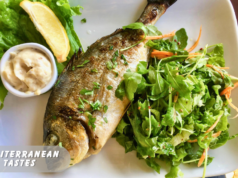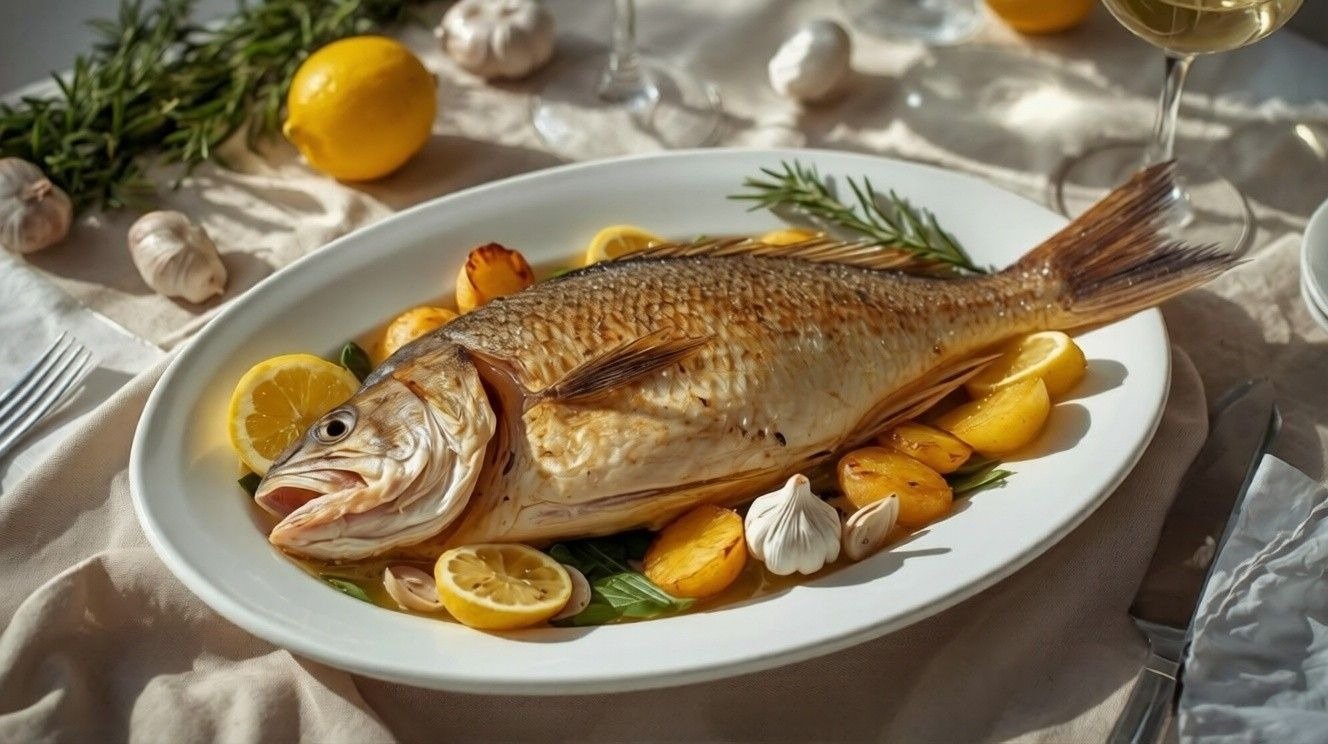
A good Mediterranean recipe can turn simple ingredients into something memorable. One of my favorites is roasted branzino, made with branzino, also known as Mediterranean sea bass. The charm of whole roasted branzino lies in its easy preparation and the perfect flavor combination it creates on the plate.
When you roast a branzino fish, the gentle roasting keeps the fish moist, juicy, and wonderfully delicious. Many people worry about cooking whole fish, but once you learn to cook it properly, the preparation method feels natural and rewarding.
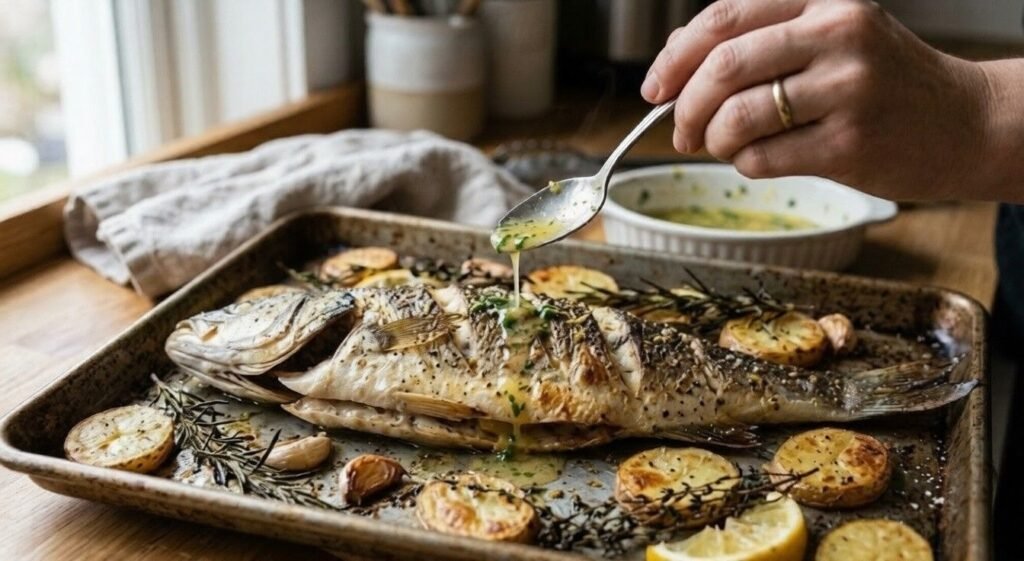
This classic Mediterranean approach uses fresh lemon, rich olive oil, and a bright olive oil sauce called Salmoriglio from Italy. First, you marinate the fish, and the step of marinating the fish builds deep flavor that later works well as a light dressing.
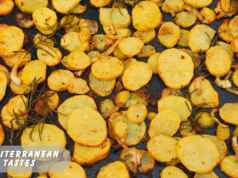
I like placing the whole fish in a roasting pan with potatoes beside it. During pan roasting, the golden potatoes soak up the juices and make the dish perfect for a relaxed Mediterranean meal or a cozy table meal with a simple salad or caramelized fennel.
At first, shopping for whole fish during fish shopping felt intimidating to me. But after preparing fish and preparing whole branzino a few times, my cooking confidence grew, even though I once felt uncomfortable cooking fish.
What is Branzino?
When I roast Branzino, I always think about the waters where it comes from. This Mediterranean Food favorite is a native European fish that lives in clean seawater near the coastline. In kitchens across Italy, Spain, Greece, and France, cooks value it for a pleasant and balanced taste. The flesh stays moist, flaky, and lean, which makes it excellent for roasting whole.
The name Branzino is Italian, but the same fish appears under many local names around the Mediterranean. In Italy, it is called spigola, while in Spain, people say lubina. In Greece, it is known as lavraki, and in parts of France, chefs use loup de mer. When you see more than one on a menu, the plural may appear as branzini.
Many people ask about the taste of branzino. The meat is white, mildly saline, and slightly sweet, with a very fresh flavor from the sea. When roasted well, the texture becomes flaky yet moist, and the bass character stays delicate. That is why chefs often describe it as a tasty but clean-tasting bass fish.
Simple Ingredients for the Roasted Branzino Dish
In Mediterranean kitchens, cooking often follows an easy fashion. This aliment works with minimal effort and just a handful of ingredients. The focus stays on the fish, particularly fresh branzino. That simple approach keeps the recipe clean and balanced.
The meal becomes a complete meal when everything cooks in one pan. I often place the roasted fish in the middle and build the rest around it. This style highlights the natural flavor of branzino without overworking the recipe. From experience, fewer ingredients often make the best Mediterranean meal.
A quick lemon olive oil sauce
A quick Mediterranean sauce brings the dish together. It blends olive oil and lemon for a fresh flavor with branzino. This simple mix has been popular since ancient coastal cooking.
I usually whisk everything together in about 5 minutes or less. The mix works as both a light marinade and a fresh dressing. Adding garlic and herbs deepens the flavor.
Lemon
The bright lemon note keeps the fish light and balanced. Its fresh flavor naturally pairs with roasted seafood. Before cutting the fruit, I like to grate the zest first. Then I start squeezing the juice and add thin slices before the roast.
During cooking, the citrus slowly lifts the taste of the fish and potatoes. I sometimes sprinkle extra zest over the dish at the end. It is a simple trick I first tried years ago while testing lemon with roasted potatoes. That small touch deepens the aroma without hiding the natural flavor.
Aromatics
After the main component, aromatics form the depth of the dish. I often begin with fresh rosemary and bay leaves, roughly rubbing the fish. They slowly release a calm, harmonious aroma while roasting. This simple mix adds natural beauty to the plate.
For muscular flavour, I add garlic cloves, sometimes unpeeled and softly crushed. They roast lightly beside the potatoes and scent the whole pan. These small touches always please garlic lovers at the table. The herbs create a soft layer of flavor that defines classic Mediterranean cooking.
Potatoes
After preparing the fish in the first step, I usually turn to the side that completes a Mediterranean plate. Let them cook until golden, creating an incredibly simple base for the dish. Sometimes I prepare the starch separately so the textures stay clear on the plate.
While the fish roasts, the potatoes finish in the pan and become delicious. If guests want variety, I may serve a little rice beside the crispy potatoes. This small change turns the plate into a full meal. In my kitchen, that balance of roasted fish and tender potatoes always feels incredibly satisfying.
Branzino fish
After setting up the base ingredients, I move to the fish, the heart of this Mediterranean dish. When I cook branzino, I keep the method easy and use one wide pan so the heat spreads well. A few lemon slices and olive oil turn the fish into something incredibly fresh and naturally delicious.
For a full meal, I usually prepare sides separately to keep the texture right. Sometimes I roast a simple potato, other days I serve light rice, but crispy potatoes remain my favorite. A small trick I learned in kitchens is adding the sides near the end so the pan keeps the branzino perfect while everything stays balanced and delicious.
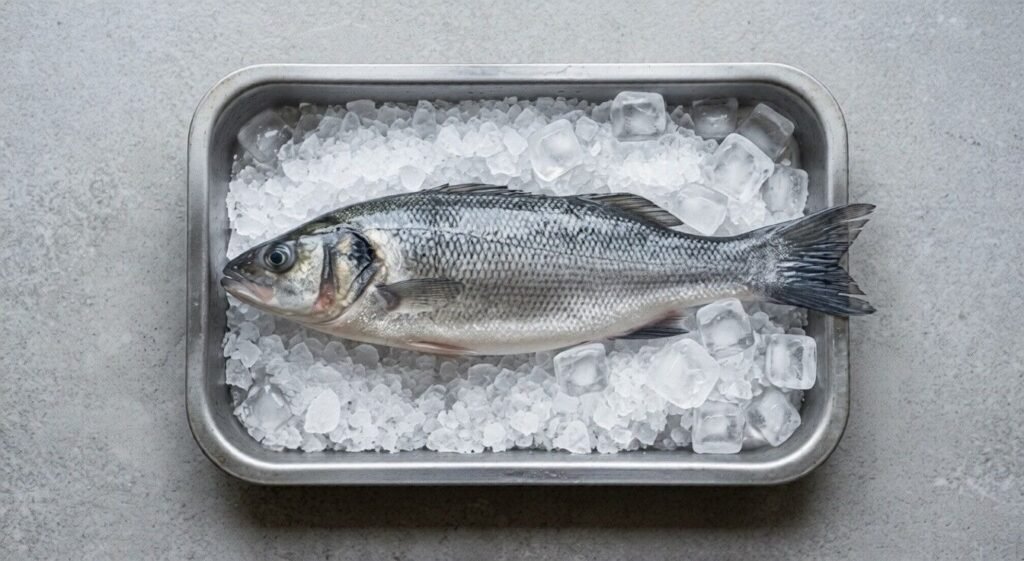
Shopping Tips: How to Find Fresh Fish?
When starting with cooking and shopping for whole fish, many people feel intimidated. I felt the same until I learned the basics at the market counter. Soon, I could distinguish a freshly caught fish that felt worthy of cooking. With time, you also learn when to pass on a fish.
The biggest difference appears when shopping for a whole fish instead of a fillet. A fillet offers convenience, but many signs and references of freshness are missing. These clues are often removed once the fish is already filleted. That is one of the real advantages of buying fish whole.
After you choose the fish, the fishmonger helps to ready it. They can scale, gut, and clean the fish to your specifications. This small service makes the recipe easier to cook at home. It is a simple step that improves confidence with fresh fish.
Here’s what to look for:
When I buy a fish, I always start with the Eyes. They should look clear, shiny, and puffy. If they look cloudy or sunken, the fish may not be fresh. This fast visible check often tells a lot before you even touch the fish.
Next, lightly lift the gill flaps to see the Gills. Fresh ones look bright red or sometimes orange. If the color turns brown, freshness is doubtful. In my experience, this simple check helps avoid older fish at the counter.
Then observe the Skin of the fish. It should look shiny and free from discoloration. A fresh surface often feels slightly slippery, almost like it just came from the ocean. That natural shine usually signals good handling and a recent catch.
Touch also matters when buying fish. Pay attention to the Texture by gently pressing it. The flesh should feel firm and quickly bounce back when pressed. If it stays soft or leaves a mark, the Texture is likely past its best.
Finally, trust your Smell test. Fresh fish should remind you of the ocean, not a strong fish odor. Any rancid or unpleasant Smell is a warning sign. When buying seafood often, this step becomes second nature.
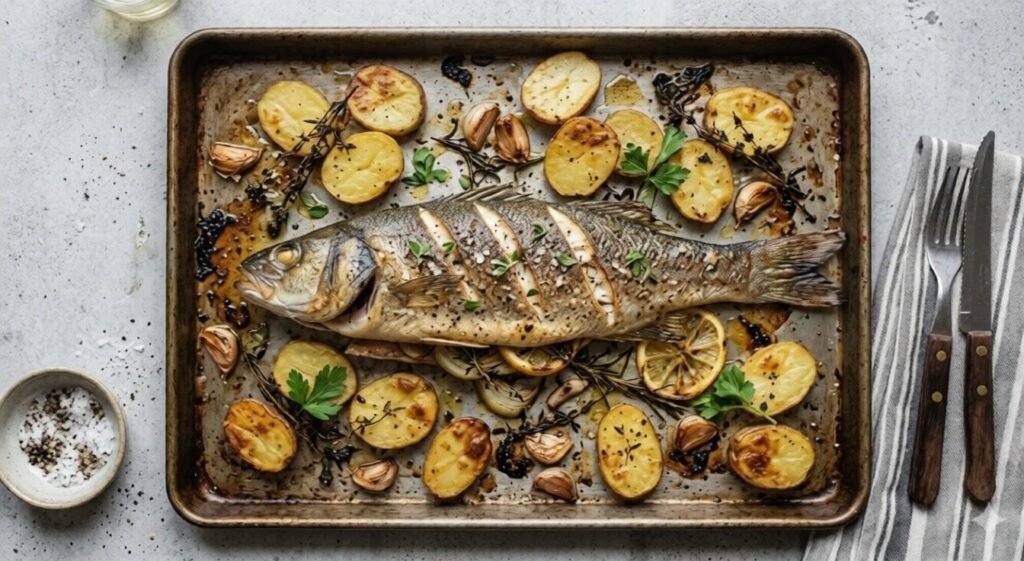
Overview of Making Mediterranean Branzino
In many Mediterranean cooking rooms, roasting branzino whole is the easiest and best way to cook fish. The same method works for branzini, the plural form often seen on a list. The skin defends the meat, keeping it flavorful during cooking. It also prevents the fish from drying or falling apart.
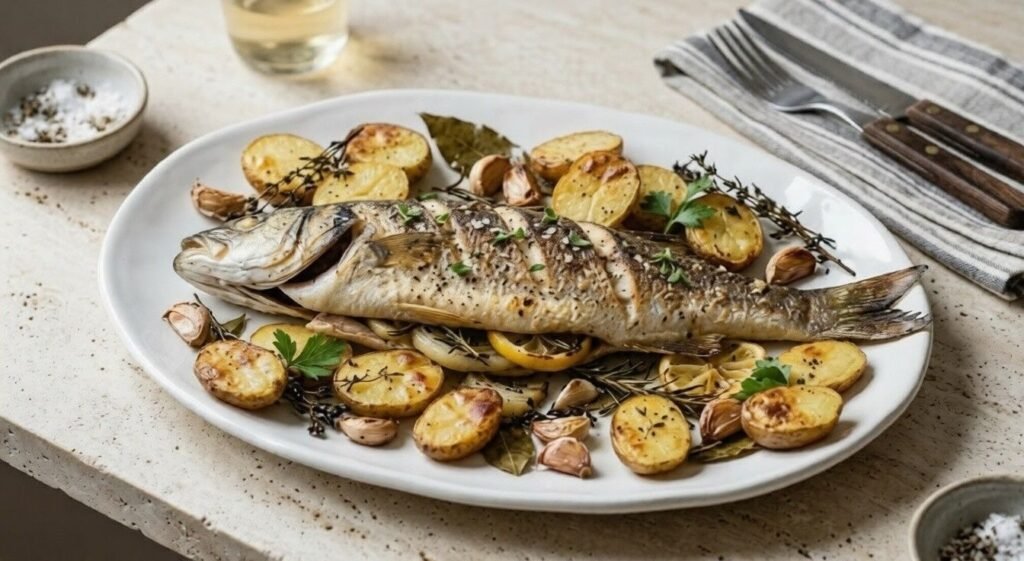
This traditional style has shaped coastal cooking for millennia. You will still see it commonly served in restaurants and family homes. I often prefer this way because the fish stays moist under the skin. Simple roasting lets the natural taste of branzino shine.
Serve Roasted Branzino With
Roasted Branzino With Potatoes
Roasted branzino with potatoes is a flexible meal for many moments. It can be served for a special occasion or a unrestrained casual weekend dinner. In my kitchen, this dish is often the first choice when I want uncomplicated food. The mild fish flavor works well with warm sides.
One favorite way to accompany the fish is caramelized fennel. Its soft Mediterranean hint of anise adds depth to the plate. When roasted slowly, the fennel turns golden in color. That sweet edge helps the flavors pair beautifully with roasted branzino and potatoes.
Roasted Branzino With Simple Green Salad
After serving the roasted fish, I often place a simple, green salad beside it. The salad is lightly dressed with lemony olive oil and a little salmoriglio sauce. This keeps the plate fresh and balanced next to the roasted fish. The bright flavor works well with Mediterranean cooking.
For this salad, I sometimes omit the herbs to keep it clean. Instead, I add freshly crushed black pepper over the leaves. That small touch sharpens the taste of the green salad. From experience, the pepper and lemony dressing bring the dish together.
Roasted Branzino With Desserts
After enjoying branzino as the main dish, I like to finish the meal with something light. Some of the best desserts for seafood meals keep the flavors fresh and simple. A chilled lemon granita works beautifully after roasted fish. Its bright citrus taste cleans the palate and balances the richness of branzino.
At the Table: How to Eat Whole Branzino
When serving a big fish, I sometimes debone it in the kitchen before bringing the plate out. If each person has an individual fish, the filleting often happens at the table as you eat. In that case, it is helpful to provide a small side plate for discarding the bones. This simple step keeps the table tidy while everyone enjoys the fish.
There is no right or wrong way to handle it. I am not an expert, though my mother always did a better job than others. My principal advice is to take your time with the fish. Relax, thoroughly enjoy, and let the meal unfold naturally.
FAQ’s
Q. What is branzino?
Ans: Branzino is a Mediterranean sea bass known for its mild, slightly sweet flavor and flaky white flesh. It is popular in many European coastal cuisines.
Q. Why is branzino often roasted whole?
Ans: Roasting branzino whole keeps the fish moist and flavorful while the skin protects the delicate meat during cooking.
Q. What does branzino taste like?
Ans: Branzino has a mild, slightly salty, and lightly sweet flavor with a delicate texture that becomes flaky when cooked.
Q. What ingredients are commonly used with roasted branzino?
Ans: Typical ingredients include olive oil, lemon, garlic, herbs like rosemary or bay leaves, and potatoes.
Q. What is Salmoriglio sauce?
Ans: Salmoriglio is a simple Italian sauce made with olive oil, lemon juice, garlic, and herbs, often used as a marinade or dressing for seafood.
Q. How can you tell if a whole fish is fresh?
Ans: Fresh fish should have clear eyes, bright red gills, shiny skin, firm texture, and a clean ocean-like smell.
Q. Why are potatoes often served with roasted branzino?
Ans: Potatoes absorb the flavorful juices from the fish while roasting, making them a perfect and satisfying side dish.
Q. What sides go well with roasted branzino?
Ans: Popular sides include roasted potatoes, caramelized fennel, rice, or a simple green salad.
Q. How do you eat whole roasted branzino?
Ans: The fish can be gently filleted at the table, separating the meat from the bones while using a small plate to discard bones.
Q. What dessert pairs well after a branzino meal?
Ans: Light desserts like lemon granita work well because their fresh citrus flavor cleans the palate after seafood.