
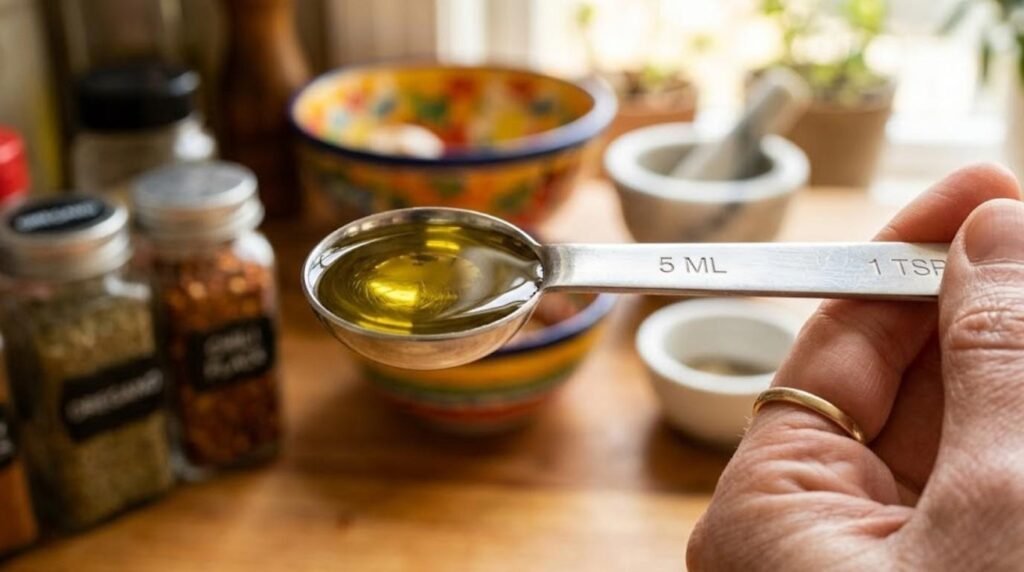
Quick answer: There are 5 milliliters (mL) in one metric teaspoon. A US customary teaspoon is approximately 4.93 mL, but recipes normally round it to 5 mL for convenient kitchen measuring.
Here is the basic conversion:
- 1/4 teaspoon = 1.25 mL
- 1/2 teaspoon = 2.5 mL
- 1 teaspoon = 5 mL
- 2 teaspoons = 10 mL
- 3 teaspoons = 15 mL
- 4 teaspoons = 20 mL
For everyday cooking and baking, use this simple rule:
Teaspoons × 5 = Milliliters
Need to convert a different quantity? Use our free kitchen measurement converter to convert teaspoons, milliliters, tablespoons, cups, and other common kitchen units instantly.
This guide includes complete teaspoon-to-milliliter and milliliter-to-teaspoon charts, formulas, examples, and answers to common conversion questions.
How Many Milliliters Are in a Teaspoon?
One metric teaspoon equals 5 mL.
The US customary measurement is slightly smaller. According to the NIST approximate conversion table, one US teaspoon converts to approximately 4.93 mL.
The difference between 4.93 mL and 5 mL is only 0.07 mL. This is too small to affect most home recipes, so measuring spoons and recipe charts normally use:
1 teaspoon = 5 mL
The FDA household measurement guidance also treats one teaspoon as 5 mL for US nutrition-labeling purposes.
What Does mL Mean?
The abbreviation mL means milliliter.
A milliliter is a metric unit used to measure volume. There are 1,000 milliliters in one liter.
Recipes often use milliliters for:
- Water
- Milk
- Oil
- Vanilla extract
- Lemon juice
- Sauces
- Syrups
- Other liquid ingredients
The correct abbreviation is mL, with a lowercase “m” and uppercase “L.”
Teaspoon to mL Conversion Formula
To convert metric teaspoons to milliliters, multiply the number of teaspoons by 5.
Milliliters = Teaspoons × 5
Example 1: Convert 2 teaspoons to mL
2 × 5 = 10
2 teaspoons = 10 mL
Example 2: Convert 3 teaspoons to mL
3 × 5 = 15
3 teaspoons = 15 mL
Example 3: Convert 1/2 teaspoon to mL
0.5 × 5 = 2.5
1/2 teaspoon = 2.5 mL
For ordinary recipes, this metric formula is the easiest and most practical method.
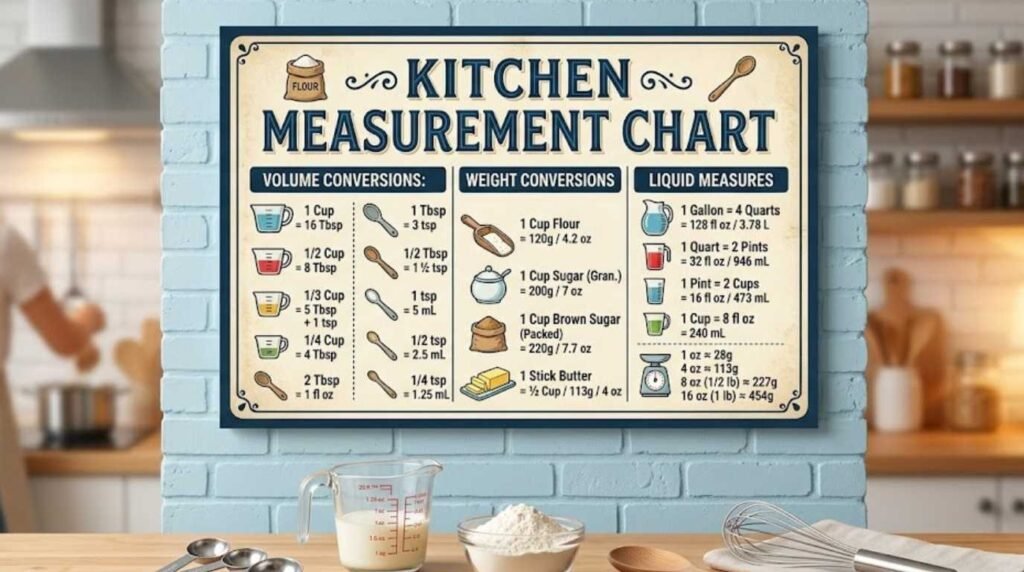
Teaspoon to Milliliter Conversion Chart
Use this chart when a recipe lists teaspoons but your measuring tool is marked in milliliters.
| Teaspoons | Milliliters |
| 1/8 tsp | 0.625 mL |
| 1/4 tsp | 1.25 mL |
| 1/3 tsp | Approximately 1.67 mL |
| 1/2 tsp | 2.5 mL |
| 3/4 tsp | 3.75 mL |
| 1 tsp | 5 mL |
| 1 1/2 tsp | 7.5 mL |
| 2 tsp | 10 mL |
| 2 1/2 tsp | 12.5 mL |
| 3 tsp | 15 mL |
| 4 tsp | 20 mL |
| 5 tsp | 25 mL |
| 6 tsp | 30 mL |
| 7 tsp | 35 mL |
| 8 tsp | 40 mL |
| 9 tsp | 45 mL |
| 10 tsp | 50 mL |
| 12 tsp | 60 mL |
| 15 tsp | 75 mL |
| 20 tsp | 100 mL |
The NIST Metric Kitchen guide also lists 1/4 teaspoon as 1.25 mL, 1/2 teaspoon as 2.5 mL, and one teaspoon as 5 mL for home cooking.
How to Convert mL to Teaspoons
To convert milliliters to metric teaspoons, divide the number of milliliters by 5.
Teaspoons = Milliliters ÷ 5
Example 1: Convert 10 mL to teaspoons
10 ÷ 5 = 2
10 mL = 2 teaspoons
Example 2: Convert 15 mL to teaspoons
15 ÷ 5 = 3
15 mL = 3 teaspoons
Example 3: Convert 2.5 mL to teaspoons
2.5 ÷ 5 = 0.5
2.5 mL = 1/2 teaspoon
Milliliter to Teaspoon Conversion Chart
| Milliliters | Teaspoons |
| 1 mL | 0.2 tsp, or 1/5 tsp |
| 1.25 mL | 1/4 tsp |
| 2 mL | 0.4 tsp |
| 2.5 mL | 1/2 tsp |
| 3.75 mL | 3/4 tsp |
| 5 mL | 1 tsp |
| 7.5 mL | 1 1/2 tsp |
| 10 mL | 2 tsp |
| 12.5 mL | 2 1/2 tsp |
| 15 mL | 3 tsp |
| 20 mL | 4 tsp |
| 25 mL | 5 tsp |
| 30 mL | 6 tsp |
| 40 mL | 8 tsp |
| 50 mL | 10 tsp |
| 60 mL | 12 tsp |
| 75 mL | 15 tsp |
| 100 mL | 20 tsp |
How Many Teaspoons Are in 1 mL?
One milliliter equals 0.2 metric teaspoon, or one-fifth of a teaspoon.
Calculation:
1 ÷ 5 = 0.2 teaspoon
This is a very small amount and is difficult to measure with ordinary kitchen spoons. When accuracy matters, use a milliliter-marked pipette, small measuring tool, or syringe reserved only for cooking.
Do not substitute 1/8 teaspoon for 1 mL in precision baking. One-eighth teaspoon equals 0.625 mL, which is noticeably less than 1 mL.
Metric Teaspoon vs. US Teaspoon
Two figures commonly appear in conversion guides:
| Teaspoon system | Volume |
| Metric teaspoon | 5 mL |
| US customary teaspoon | Approximately 4.93 mL |
Use 5 mL when:
- Following a metric recipe
- Using standard measuring spoons
- Making everyday food conversions
- Reading US nutrition-label measurements
Use approximately 4.93 mL only when a calculation requires the more precise US customary conversion.
For home cooking, the difference is negligible.
Teaspoons, Tablespoons and Cups
The USDA measurement conversion table gives these standard US kitchen relationships:
- 3 teaspoons = 1 tablespoon
- 16 tablespoons = 1 cup
- 48 teaspoons = 1 cup
- 8 fluid ounces = 1 cup
That means:
| Measurement | Equivalent |
| 1 teaspoon | 5 mL for practical cooking |
| 3 teaspoons | 1 tablespoon |
| 6 teaspoons | 2 tablespoons |
| 12 teaspoons | 1/4 cup |
| 24 teaspoons | 1/2 cup |
| 48 teaspoons | 1 cup |
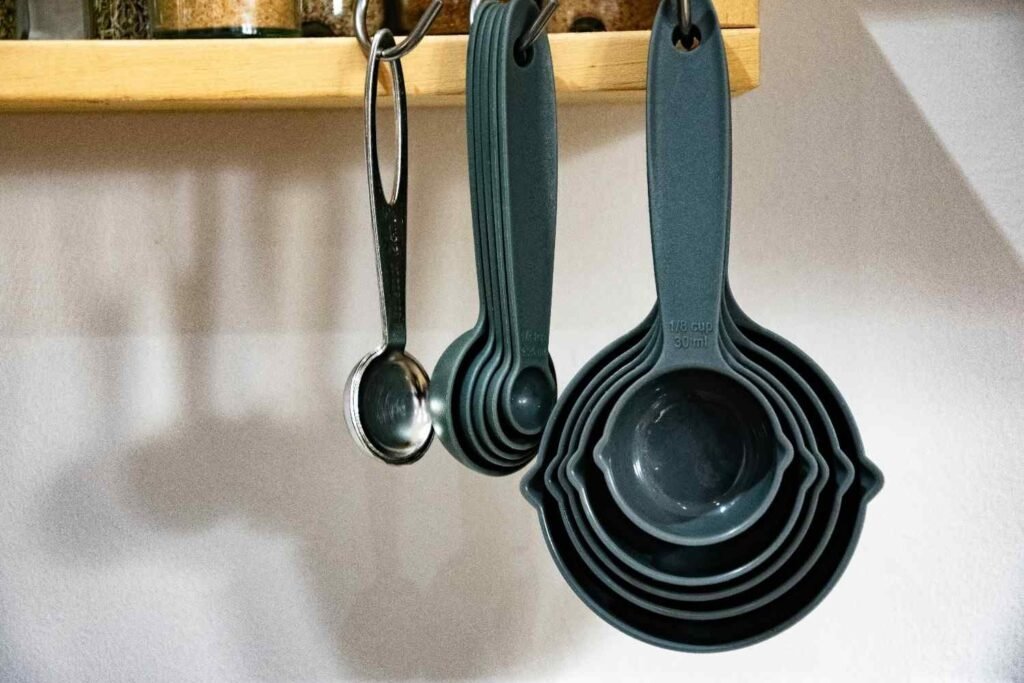
An Australian tablespoon can be different from the standard US tablespoon. For a detailed explanation of spoon size, markings, and international tablespoon differences, read our guide to what a measuring teaspoon looks like.
How to Measure Teaspoons Accurately
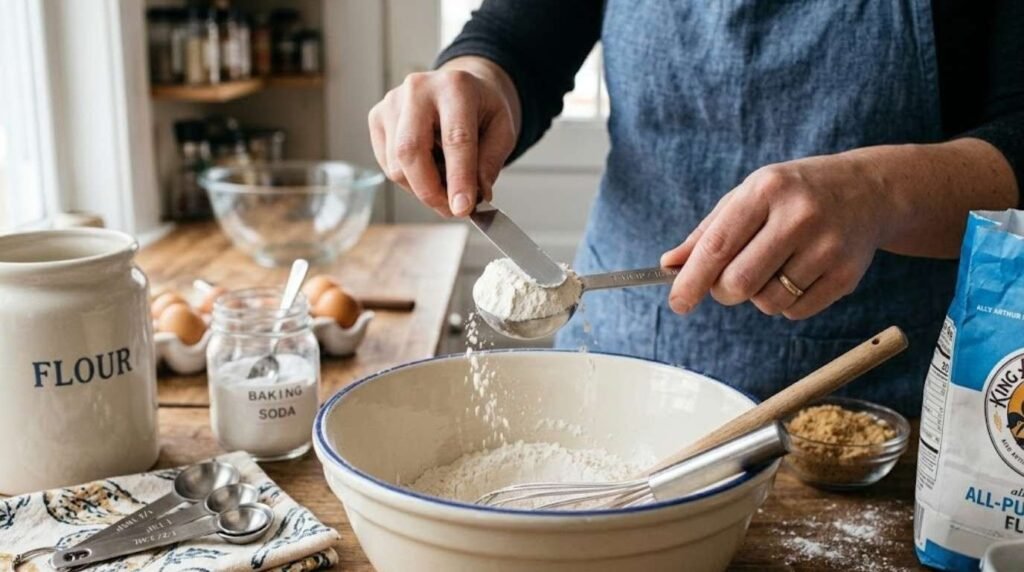
Use a measuring spoon marked 1 tsp or 5 mL whenever possible.
For dry ingredients:
- Fill the measuring spoon.
- Sweep a straight edge across the top.
- Remove the excess ingredient.
- Use the level amount unless the recipe says heaped or rounded.
For liquids:
- Place the spoon on a level surface.
- Fill it carefully to the rim.
- Avoid spilling while transferring it.
A household spoon from a flatware set is not necessarily equal to one measuring teaspoon. Ordinary spoons vary in size and shape.
For more help choosing the correct spoon, see our practical guide explaining how much a teaspoon holds.
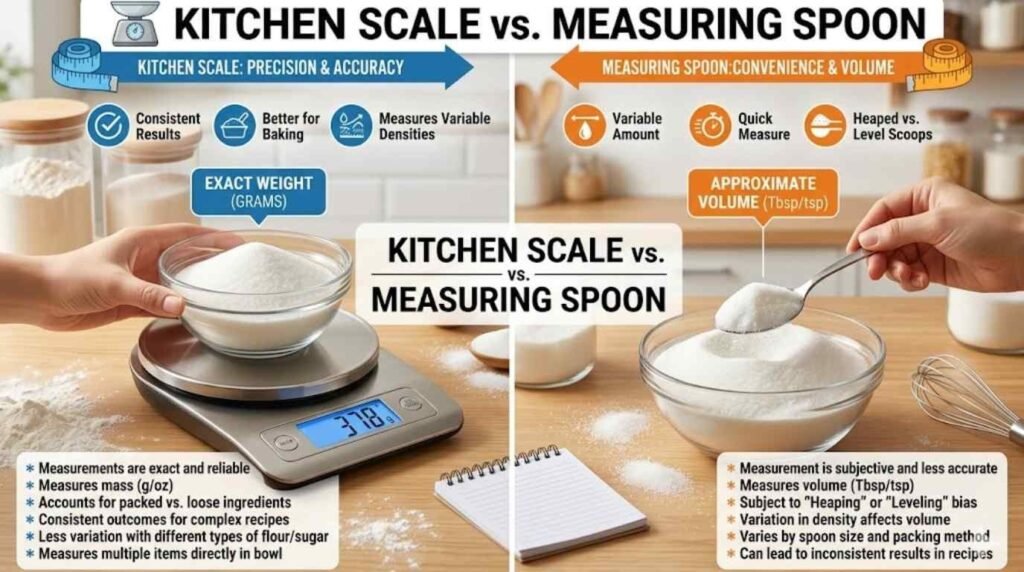
Volume Is Not the Same as Weight
Teaspoons and milliliters measure volume. Grams measure weight or mass.
One teaspoon does not always equal 5 grams.
For example:
- One teaspoon of water weighs approximately 5 grams.
- One teaspoon of honey weighs more than water.
- One teaspoon of flour weighs less than water.
- Salt and sugar have different weights even when measured in the same spoon.
When a recipe lists teaspoons or milliliters, measure by volume. When it lists grams, use a kitchen scale.
More Kitchen Measurement Guides
Once you understand teaspoon conversions, these larger kitchen measurements are also useful:
- Learn how many cups are in a pint.
- Check how many cups are in a quart.
Together, these guides cover small and large recipe measurements without mixing volume and weight.
Frequently Asked Questions
How many mL are in a teaspoon?
One metric teaspoon equals 5 mL. A US customary teaspoon is approximately 4.93 mL, but recipes normally round it to 5 mL.
Is 5 mL one teaspoon?
Yes. Five milliliters is one metric teaspoon and the standard practical conversion used in cooking.
How many mL are in 1/2 teaspoon?
Half a teaspoon equals 2.5 mL.
How many mL are in 1/4 teaspoon?
One-quarter teaspoon equals 1.25 mL.
How many mL are in 1/3 teaspoon?
One-third teaspoon equals approximately 1.67 mL.
How many mL are in 2 teaspoons?
Two teaspoons equal 10 mL.
How many mL are in 3 teaspoons?
Three teaspoons equal 15 mL.
How many teaspoons are in 10 mL?
Ten milliliters equal 2 metric teaspoons.
How many teaspoons are in 15 mL?
Fifteen milliliters equal 3 metric teaspoons, or one standard 15 mL tablespoon.
How many teaspoons are in 100 mL?
One hundred milliliters equal 20 metric teaspoons.
How do I convert teaspoons to mL?
Multiply the number of metric teaspoons by 5.
How do I convert mL to teaspoons?
Divide the number of milliliters by 5.
Is one teaspoon always exactly 5 mL?
A metric teaspoon is 5 mL. A US customary teaspoon is approximately 4.93 mL. Most recipes use 5 mL because the difference is too small to affect ordinary cooking.
Final Answer
There are 5 mL in one metric teaspoon. A US customary teaspoon converts to approximately 4.93 mL, but 5 mL is the practical measurement used in most recipes.
Remember these two formulas:
Teaspoons × 5 = Milliliters
Milliliters ÷ 5 = Teaspoons
Use a proper measuring spoon for accurate results, particularly when measuring baking soda, baking powder, yeast, salt, or other ingredients that can affect a recipe in small amounts.