
The Mediterranean diet is not one strict menu or a short-term diet challenge. It is a flexible eating pattern inspired by the traditional foods and cooking habits of countries around the Mediterranean Sea.
The details vary from one country and region to another, but the shared foundation usually includes vegetables, fruit, beans, whole grains, nuts, seeds, and olive oil. Fish, eggs, poultry, and dairy may be included in moderate amounts, while red meat, sweets, and heavily processed foods are generally eaten less often.
Because it describes an overall pattern rather than a fixed set of rules, the Mediterranean diet can be adapted to different cultures, budgets, and dietary needs.
Mediterranean diet
The Mediterranean diet is a generic term. It describes traditional eating habits across many countries. These lands border the Mediterranean Sea. So one standard plan does not fully exist.
- About 16 nations border this sea today.
- Their eating styles often vary across regions.
- Each country shows clear food differences.
- I notice this in real meal patterns.
Food choices reflect culture, ethnic background, and religion. They also reflect the economy, geography, and local access. Local agricultural production shapes what people eat most. That is why the pattern looks different in different places.
Still, some common factors connect these traditions. Meals often feel simple, fresh, and shared. From my experience, that makes the pattern easier. It also keeps the first topic linked here.
Mediterranean Diet Map
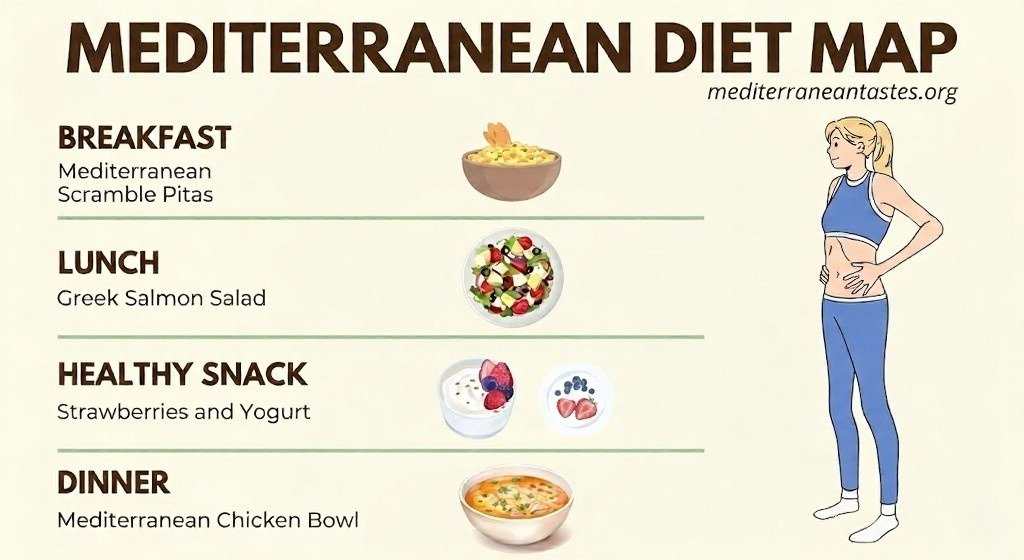
The Mediterranean region includes countries in Southern Europe, North Africa, and Western Asia. Their cuisines are not identical. Greek, Italian, Spanish, Turkish, Lebanese, Moroccan, and other regional food traditions use different ingredients and cooking methods.
The term “Mediterranean diet” therefore refers to shared eating principles rather than one authentic menu followed by every Mediterranean country.
A Mediterranean-Style Diet Typically Includes
From the first topic, this section shows the everyday plate. It starts with plant-based foods that feel simple and filling. In my experience, this makes the pattern easier to keep. Most meals begin with vegetables, fruits, beans, and grains.
You also see bread, potatoes, nuts, and seeds often. These foods are usually fresh and minimally processed. They form the base of many daily meals at home. That base is one reason this style feels so natural.
The primary fat source is usually olive oil. Then come dairy products, eggs, fish, and poultry. These are eaten in moderate amounts, not in excess. That balance supports taste, routine, and steady food choices.
By contrast, red meat appears in low amounts. Sweets are less common and not daily staples. Sometimes wine is served with food, not apart. And fruit may replace dessert in many settings.
Does the AHA Recommend a Mediterranean-Style Diet?
AHA supports a Mediterranean-style diet. The American Heart Association includes it in its recommendations. It is a healthy dietary pattern I often suggest first. That advice comes from practice, not trends alone.
Add low-fat or fat-free dairy products, plus fish. Choose poultry, non-tropical vegetable oils, and nuts often. A healthy diet can steadily improve overall health.
This helps in preventing heart disease and stroke. It works by reducing key risk factors over time. That includes obesity, diabetes, high cholesterol, and high blood pressure. The evidence is strong, especially with virgin olive oil. It may help the body remove excess cholesterol.
That can keep arteries and blood vessels more open. It may support brain health: think, remember, process information, and age. One study linked healthiest eaters, aged 50, to nearly 90%.
DASH, or Dietary Approaches to Stop Hypertension
DASH deserves a clear look. It aligns with AHA recommendations in many practical ways. In clinic work, I have seen it improve health steadily.
Like the Mediterranean diet, it uses regular use wisely. That includes olive oil and a mostly plant-based plate. It can also fit a vegetarian or vegan diet. So it offers a healthy way to eat.
The important thing is the overall quality of meals. Not single nutrients, but whole foods, matter most. Good menus include nutrient-dense foods every day. Think vegetables, fruits, legumes, and lean proteins.
It may also use dairy products and some meat. Research has proven that benefits occur when people stay consistent. It helps limit calories from little nutritional value foods. That balance is why both patterns stay trusted.
What About Other Popular Diets?
People often ask about popular diets. That includes paleo, ketogenic, keto, Atkins, and zone. Some also try interval plans or Whole30 for control. In practice, many of these are seen as trendy diets.
They often promise dramatic results in the short-term. But that does not always build a lasting routine. The AHA looks at food through science-based criteria. It prefers a healthy eating pattern that stays heart-healthy.
Mediterranean Diet Plan
| Food Group | Best Choice | Limit |
| Vegetables | Eat daily | — |
| Fruits | Eat daily | Sugary fruit products |
| Whole grains | Bread, oats, rice, potatoes | Refined carbs |
| Beans & legumes | Lentils, chickpeas, beans | — |
| Nuts & seeds | Small daily portions | Salted/sugary kinds |
| Healthy fats | Olive oil | Butter, tropical oils |
| Fish & poultry | Moderate amounts | Fried versions |
| Dairy & eggs | Moderate amounts | High-fat processed dairy |
| Red meat | Rarely | Frequent intake |
| Sweets & sugary drinks | Rarely | Daily use |
Common Mediterranean Diet Myths
Myth: You have to eat fish every day.
Fish can be included regularly, but beans, lentils, eggs, yogurt, and poultry can also provide protein.
Myth: Every meal must contain olive oil.
Olive oil is a traditional primary fat, but portions still matter and every dish does not need to be heavily coated in it.
Myth: Pasta and bread are not allowed.
Bread, grains, pasta, and potatoes can fit the pattern. Whole-grain and less processed choices are often emphasized, while portions should match individual needs.
Myth: Red wine is required.
Alcohol is optional, not essential. People should not begin drinking for possible health benefits.
FAQ’s
Q. What is the Mediterranean diet?
Ans: A balanced eating pattern built on fresh, wholesome foods. It supports healthy habits and easy daily meal choices.
Q. Why is the Mediterranean diet so popular?
Ans: Experts praise it for health, taste, and simplicity. It fits everyday life without strict or stressful rules.
Q. Does one exact Mediterranean diet plan exist?
Ans: No, there is no single fixed Mediterranean plan. It changes by country, culture, religion, and local foods.
Q. Which countries are linked to the Mediterranean diet?
Ans: It comes from nations around the Mediterranean Sea. About 16 countries influence these traditional eating patterns.
Q. What foods are commonly eaten in this diet?
Ans: Vegetables, fruits, beans, grains, nuts, and seeds appear often. Olive oil, fish, eggs, poultry, and dairy are moderate.
Q. What foods are limited in the Mediterranean diet?
Ans: Red meat, sweets, sugary drinks, and processed foods. Refined carbs and saturated fats are also kept low.
Q. Is olive oil important in the Mediterranean diet?
Ans: Yes, olive oil is the main fat source. It adds flavour and supports a healthier eating pattern.
Q. Does the American Heart Association recommend this diet?
Ans: Yes, the AHA supports Mediterranean-style eating patterns. It recommends them for heart health and overall wellness.
Q. How does the Mediterranean diet help health?
Ans: It may reduce obesity, diabetes, cholesterol, and blood pressure. It also supports heart health and brain function.
Q. How is it different from trendy diets?
Ans: Trendy diets chase fast results and strict control. This diet builds lasting habits and sustainable eating.