
For the exact conversion maths, start with our guide on how many ounces in 750 ml.
What Is a 750ml Bottle?
A 750ml bottle is a container holding 750 millilitres of liquid, which is exactly three-quarters of a litre. It is the world’s most common vessel for wines and spirits, and brands ordering custom bottle boxes for the format have to design around its standard dimensions. The volume is standardised across many countries, the United States included, where it replaced the traditional “fifth” after the US switched liquor bottles to metric sizes in 1979.
One point clears up most of the confusion before it starts. When converting this capacity, you are working in fluid ounces (fl oz), not weight ounces. A fluid ounce measures volume, not mass, and forgetting that is the usual reason people stumble over how many ounces sit inside the bottle.
This capacity became a de facto standard because it matched the amount of liquid people actually wanted for meals and social occasions. Manufacturers and distributors then embraced it for a practical reason: a single, shared size brought consistency to pricing and shipment across the whole supply chain.
What a 750ml Bottle Is Called in Different Industries
The name for a 750ml bottle shifts with the industry using it, though the volume never changes. In wine, it is simply the standard bottle — the most common size worldwide. In the US spirits trade it earns the nickname “fifth,” a holdover from the days when liquor sold in one-fifth of a US gallon, a measure equal to 757 ml. Many people also drop the qualifier entirely and just say bottle, since this capacity is the default serving unit for commercial packaging.
The category of drink adds its own label. Whiskey, vodka, rum, tequila, and gin — distilled beverages as a group — are said to come in a spirit bottle when filled to the 750ml format. So the same glass can be a “fifth,” a “standard bottle,” or a “spirit bottle” depending entirely on who is doing the talking and what they are selling.
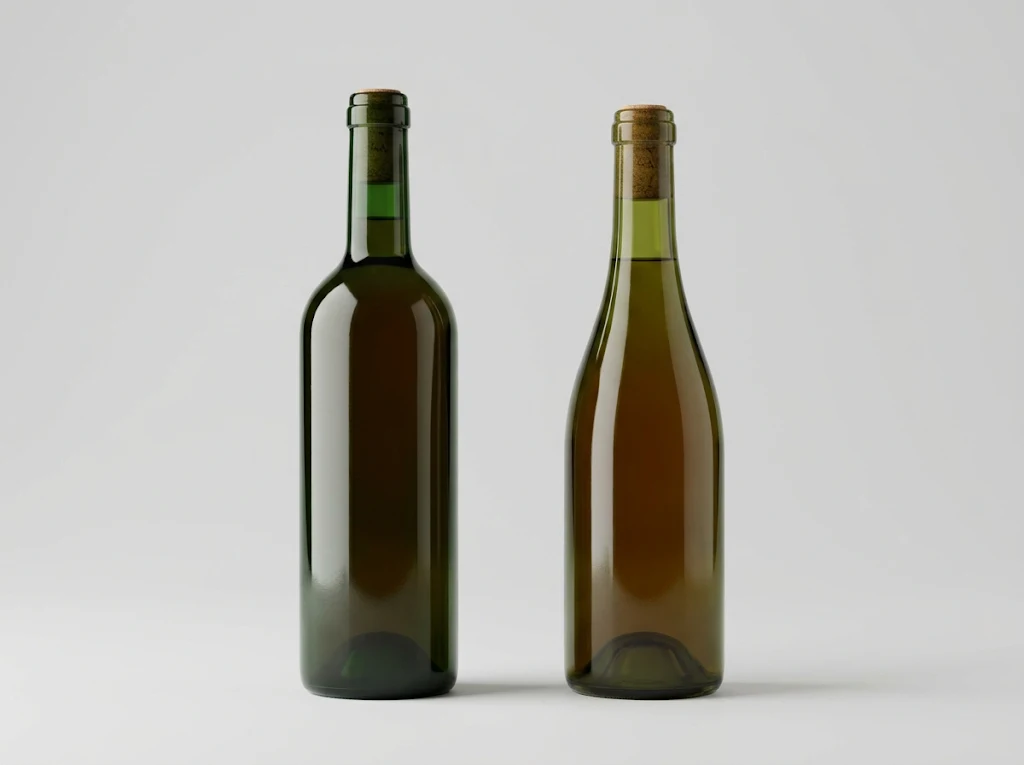
Wine goes further and names the bottle by its silhouette. A Bordeaux bottle has straight sides and high, defined shoulders, while a Burgundy bottle slopes its shoulders gently into the body. Here the shape dictates the name, which is why regional wine terminology can describe two 750ml bottles that look nothing alike — a distinction recognised across the wine trade.
Shoppers lean on a few more labels too. Retailers treat the standard bottle as their benchmark size. Everyday buyers often just call it a regular bottle. “Standard size bottle” separates it from bigger 1 L and 1.75 L formats. It also sets it apart from the smaller 375 ml half bottle.
Dimensions and Weight of a 750 ml Bottle
Physical dimensions shift a little with the glass type and contents, but a 750 ml bottle stays fairly consistent in height, diameter, and weight. Most stand 11 to 12 inches tall with a diameter of 3 to 3.5 inches. Empty, the glass weighs roughly 400 to 550 grams; filled, it usually lands around 1.2 to 1.3 kg.
These numbers matter more than you might think. They decide whether a bottle fits your fridge door. They also decide wine rack slots and gift boxes. Measure your tallest shelf before buying 12-inch bottles.
| Attribute | Typical measurement |
| Height | 11 – 12 inches |
| Diameter | 3 – 3.5 inches |
| Empty bottle weight | About 400 – 550 grams |
| Filled bottle weight | About 1.2 – 1.3 kg |
How Many Drinks or Servings in a 750 ml Bottle?
How many servings you get depends entirely on the liquid inside, since a pour of liquor is nothing like a glass of juice. A serving of spirits at 1.5 ounces yields about 16 to 17 pours, while juice at 8 ounces per glass gives only around 3 servings from the same bottle. Matching the count to the drink is what keeps portions and budget under control.
Thicker, sparingly-used liquids stretch much further. Cooking oil and vinegar, poured at roughly 0.5 ounces each, deliver about 50 servings per bottle, and flavoured syrups at 1 ounce land near 25. The table makes the spread easy to scan.
| Liquid | Serving size | Servings per 750 ml |
| Spirits | 1.5 oz | ~16–17 |
| Juices | 8 oz | ~3 |
| Cooking oil | 0.5 oz | ~50 |
| Flavoured syrups | 1 oz | ~25 |
| Vinegar | 0.5 oz | ~50 |
| Wine | 5 oz | ~5 |
Knowing the ounce value of a 750ml bottle pays off most at the serving level. The bottle holds roughly 25 ounces, and that single figure drives the pour math. At a standard 5-ounce wine pour it gives about five servings, while a typical 1.5-ounce spirit pour stretches to about 17 servings per bottle — the numbers bartenders and event planners lean on constantly.
When you need a mental image rather than a number, a few everyday comparisons help. Picture the familiar standard bottle on a shelf; think of it as about three cups of liquid, or as slightly more than a pint and a half. Those quick references make the capacity easy to judge by eye, long before anyone reaches for a measuring cup.
Common Bottle Capacities in mL and oz
In packaging, capacities are set in millilitres, yet US and UK buyers constantly need the ounce equivalent for labels, listings, and customer-facing copy. The sizes quoted most often run from a 30 mL dropper bottle at 1.01 US fl oz up to a 1.75 L “handle” at 59.17 — with 750 mL, the standard North American spirits bottle, landing at 25.36 US or 26.40 imperial fl oz. Capacity is the first line of any bottle specification, and the first figure a customer converts to ounces.
Chart:
| Capacity | US fl oz | Imperial fl oz | Typical packaging use |
| 30 mL | 1.01 | 1.06 | Dropper bottles, cosmetic samples |
| 50 mL | 1.69 | 1.76 | Spirits miniatures, cosmetics |
| 100 mL | 3.38 | 3.52 | Travel-size, premium samples |
| 250 mL | 8.45 | 8.80 | Sauces, oils, RTD beverages |
| 375 mL | 12.68 | 13.20 | Half-size spirits bottles |
| 500 mL | 16.91 | 17.60 | Liqueurs, oils, waters |
| 700 mL | 23.67 | 24.64 | Standard European spirits bottle |
| 750 mL | 25.36 | 26.40 | Standard North American spirits bottle |
| 1 L | 33.81 | 35.20 | Bar and duty-free spirits, juices |
| 1.75 L | 59.17 | 61.59 | US value-format spirits (“handle”) |
The in-between sizes each carry a story. 80 mL (2.71 US fl oz) sits between the 50 mL miniature and the 100 mL travel format, used for cosmetics rather than drinks. 375 mL (12.68 US fl oz) is exactly half a 750 mL bottle — a trial size loosely called a pint, though a true pint is 473 mL. And 500 mL (16.91 US fl oz) runs about 0.9 oz over a US pint, making it Europe’s classic liqueur and water size.
Larger formats answer their own questions. 700 mL (23.67 US fl oz) is the European spirits standard, and it is now an authorised US size for both spirits and wine, confirmed in the TTB’s January 2025 standards-of-fill update. A 1 litre bottle holds 33.81 US fl oz — roughly 5.7% more than a US quart — while the 1.75 L handle at 59.17 oz is often miscalled a half gallon, when a true US half gallon is 64 fl oz (about 1.893 L). Even the “fifth” has a catch: at a 1.5 oz pour, 750 mL yields 16.91 servings, not the clean sixteen shots many sources claim, using the NIAAA’s 1.5-ounce standard pour.
Why Is 750ml the Industry Standard?
Several forces keep the 750ml bottle at the centre of the trade. Its consumer convenience is the first: the size holds enough product for multiple servings without becoming awkward to pour or carry, which is why it stays the default for beverage packaging across spirits, wine, and oil brands. Shipping efficiency reinforces that, since these bottles nest neatly into cartons and trim transportation costs when protected by sturdy cardboard packaging.
Retail and reach seal the case. Most shelving systems are built to accommodate standard 750ml bottles, so brands lean on branded retail boxes to stand out once they are on display. On top of that, the format enjoys broad international acceptance, which streamlines manufacturing and distribution for anyone selling across borders.