
The Mediterranean diet is widely studied because it emphasizes vegetables, fruit, beans, whole grains, nuts, olive oil, and moderate amounts of fish and other animal foods.
Its strongest evidence relates to overall diet quality and cardiovascular health. Research has also explored possible effects on weight management, blood sugar, cognitive health, and healthy aging. However, no eating pattern guarantees the same result for every person.
The benefits below should be understood as possible long-term effects of following an overall healthy eating pattern—not as instant cures or promises.
Benefits of the Mediterranean Diet
1. May Support Heart Health
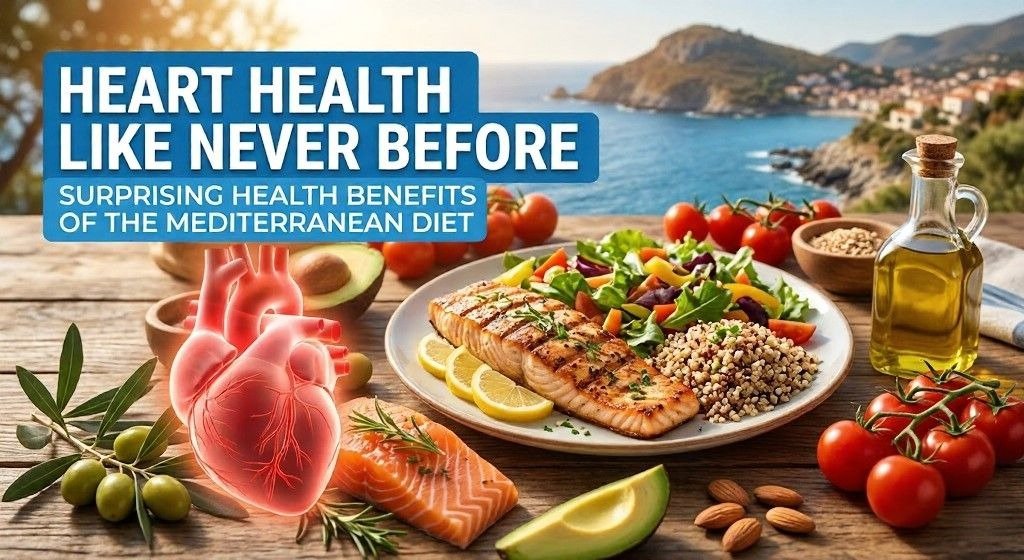
The Mediterranean diet is best known for its connection with cardiovascular health. It emphasizes plant foods, fish, nuts, and olive oil while limiting highly processed foods, added sugar, and processed meats.
Following the overall pattern consistently may help improve several heart-related risk factors. However, it should support—not replace—medical care, prescribed medication, exercise, and other advice from a qualified healthcare professional.
2. May Help with Weight Management
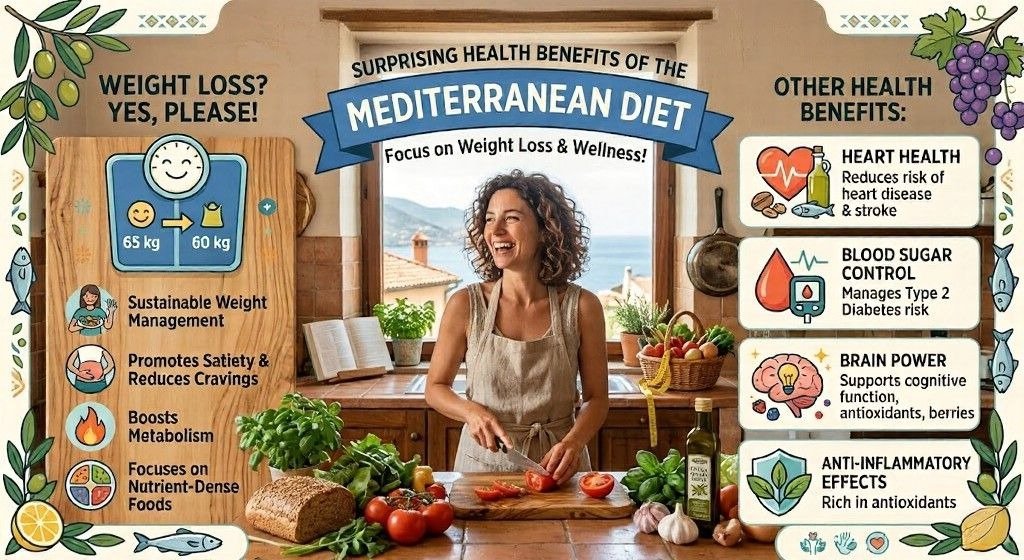
Mediterranean-style meals can be filling because they often include vegetables, beans, whole grains, protein, and healthy fats. This may make portion control easier for some people.
Weight loss is not automatic. Total intake, portion sizes, physical activity, sleep, and individual health conditions still influence results.
3. Encourages a Less Processed Diet

One practical benefit is that this eating pattern naturally shifts attention toward minimally processed foods. Cooking more meals with vegetables, grains, beans, herbs, fish, and olive oil may reduce reliance on sugary drinks, processed meats, and packaged snacks.
4. May Support Blood-Sugar Management
Beans, vegetables, whole grains, nuts, and protein-rich foods can be used to build more balanced meals. For people with diabetes, however, meal timing and carbohydrate portions may need to be adjusted with professional guidance.
5. May Support Digestive Health
Fruits, vegetables, beans, and whole grains provide dietary fiber, while foods such as yogurt may contribute to a varied diet. Increasing fiber too quickly can cause discomfort, so gradual changes and adequate fluids may be more comfortable.
6. May Support Brain Health
Researchers continue to study the relationship between Mediterranean-style eating and cognitive health. The pattern includes foods such as leafy vegetables, fish, nuts, berries, and olive oil, but it should not be presented as a guaranteed way to prevent dementia or Alzheimer’s disease
7. Can Make Healthy Eating More Enjoyable
Unlike plans that remove several food groups, Mediterranean-style eating can include bread, grains, pasta, potatoes, dairy, eggs, and desserts in suitable amounts. Its flexibility may make it easier for some people to maintain than a highly restrictive diet.
FAQ’s
Q. What makes the Mediterranean diet easier to follow than strict diets?
Ans: It uses simple foods, not strict rules or calorie counting. It feels natural, enjoyable, and easier to maintain in the long term.
Q. How does the Mediterranean diet support heart health?
Ans: Healthy fats from olive oil, nuts, and fish support the heart. It may lower cholesterol and long-term heart disease risk.
Q. Can the Mediterranean diet help with weight loss?
Ans: Yes, it supports weight loss without making meals feel restrictive. Whole foods help you stay full longer each day.
Q. Does the Mediterranean diet reduce inflammation?
Ans: Yes, it includes anti-inflammatory foods and healthy fats daily. This may ease aches, pains, and stress-related inflammation gradually.
Q. Is the Mediterranean diet good for brain health?
Ans: Yes, fish, nuts, and greens help support brain function. It may lower the risk of cognitive decline as you age.
Q. Can the Mediterranean diet improve skin health?
Ans: Yes, antioxidant-rich foods nourish skin and support a natural glow. They may improve elasticity and healthier-looking skin over time.
Q. How does the Mediterranean diet help gut health?
Ans: Fibre, yoghurt, kefir, and grains support healthy digestion daily. These foods feed good bacteria and balance the gut.
Q. Can the Mediterranean diet lower the risk of diabetes?
Ans: Yes, balanced meals help manage blood sugar more effectively. This may reduce spikes and type 2 diabetes risk.
Q. Does the Mediterranean diet give more energy?
Ans: Yes, it provides steady fuel from fats, proteins, and carbs. This helps reduce crashes and supports focus all day.
Q. Why is the Mediterranean diet seen as a long-term lifestyle?
Ans: It blends health, pleasure, and balance in everyday eating. That makes habits easier to enjoy and keep long-term.