
Is Greek food Mediterranean? Get a clear answer, compare Greek salads and regional dishes, and see how Greek cuisine differs from the Mediterranean diet.
Is Greek food Mediterranean?
Yes. Greek cuisine is part of Mediterranean cuisine, sharing regional ingredients while retaining its own dishes and traditions.
Are Greek and Mediterranean Foods the Same?
No—Greek food is one style within Mediterranean food, so the two terms are not the same. Think of the Mediterranean family as a huge umbrella covering many countries rather than one kind of food. Greece belongs to this wider Mediterranean mix alongside places such as Italy, Spain, and Morocco.
As a broad description of these culinary traditions, you could say that all Greek food is Mediterranean, but not all Mediterranean food is Greek. This distinction helps untangle the similarities and differences that can lead someone to mix up Greek and Mediterranean food. (en.wikipedia.org)
To explore the similarities between Greek and Mediterranean food, start with olive oil, then look at how each kitchen uses herbs and spices. Greek cooking offers familiar combinations of lemon, oregano, and feta, but its regional dishes also have their own flavours and traditions.
My suggestion is to explore the differences between Greek and Mediterranean food through dishes you can try: choose a Greek recipe, then compare its ingredients and preparation with a recipe from another part of the family of the Mediterranean. That gives you something more useful than a label—a way to notice what tastes familiar and what surprises you.
What Is Mediterranean Food?
Mediterranean food covers the cuisines of Mediterranean countries bordering the Mediterranean Sea. The Mediterranean region spans parts of Europe, Asia, and Africa, with 20+ countries including Greece, Italy, Spain, Lebanon, Turkey, and Morocco.
Mediterranean and Greek food are sometimes described as the same thing, but Greek food belongs within this broader collection. Historical connections link a wide variety of cultures through common food ingredients, while each country’s dishes give its Mediterranean style of cuisine a distinct character. (en.wikipedia.org)
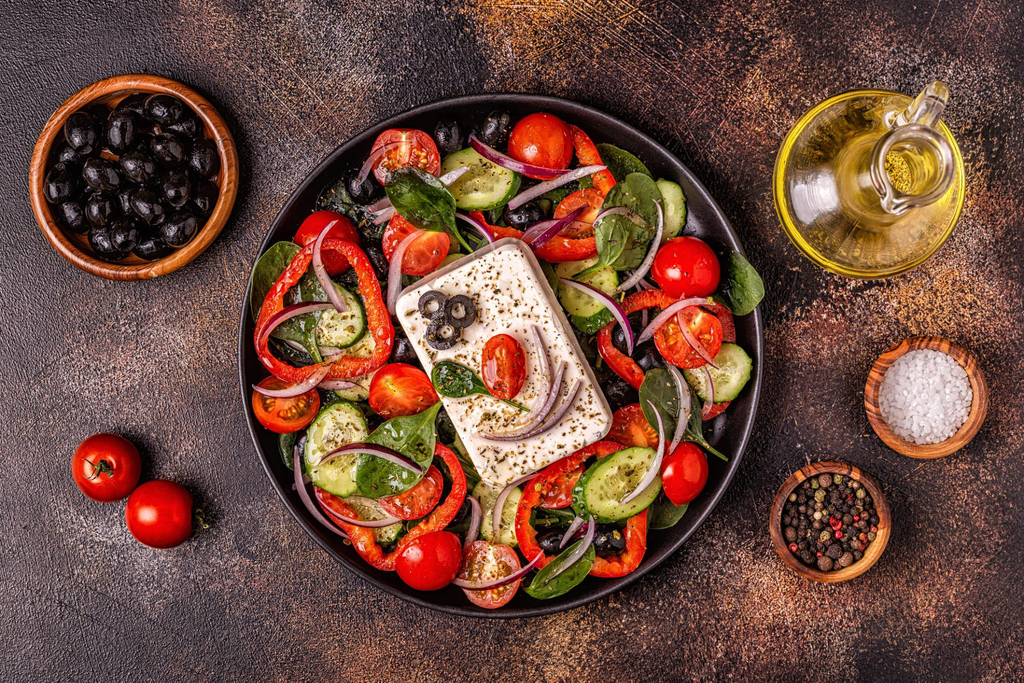
Across Mediterranean cuisine, familiar ingredients include olive oil, herbs, legumes such as lentils, grains, vegetables, fruits, seafood, fish, and regional cheeses. Their combinations vary across the region, so shared ingredients do not mean identical meals. (en.wikipedia.org) Veggies, legumes, and other plant foods also feature prominently in the Mediterranean dietary pattern, alongside healthy fats from olive oil. These healthy foods help explain its nutritional appeal, though the balance of the whole diet matters more than any single ingredient.
Basic Ingredients of Mediterranean Food
Mediterranean food brings together vegetables, legumes, grains, olive oil, dairy, fish, and meat in combinations that vary by region. (American Heart Association) To build meals around your list, choose fresh, seasonal, local ingredients where available. Use the groups below to organize your shopping, from vegetables for freshness to nuts and seeds for texture.
| Ingredient group | Ingredients from your list | Role in meals |
| Oil | Olive oil | A staple fat in Mediterranean dishes. (American Heart Association) |
| Vegetables | Green beans, carrots, green peppers, tomatoes, cucumbers | Choose a mix for freshness and variety. |
| Legumes | Beans, chickpeas, lentils | Plant-based protein sources. (One of the Five Food Groups) |
| Grains | Rice, bulgur wheat | Grain ingredients, listed separately from legumes to avoid confusing their nutritional roles. (Five Food Group Gallery) |
| Dairy | Feta, other cheese, yogurt | Choose cheese for a cheesy finish or yogurt for a creamy addition. |
| Meat and seafood | Lean meat, fish | Additional protein options. (American Heart Association) |
| Nuts and seeds | Almonds, sesame | Try as a garnish or to add texture. |
| Herbs, spices, and aromatics | Cumin, mint, garlic, rosemary, thyme | Choose seasonings to suit the dish rather than using every one together. |
For a practical shopping starting point, use our Mediterranean diet pantry list
What Is Greek Cuisine?
Greek cuisine is a branch of Mediterranean food with regional traditions of its own. Olive oil, lemon, and herbs create familiar flavor combinations, while cheese, vegetables, seafood, and lamb appear in many dishes. Greek food shares common ingredients with the wider Mediterranean cuisine, but their preparation and combinations give individual recipes a distinct flavor. (en.wikipedia.org)
Common Ingredients of Greek Foods
| Ingredient group | Examples | Place in Greek cooking |
| Olive oil and olives | Olive oil, olives | Familiar ingredients across Greek cooking, from salads to cooked dishes. (en.wikipedia.org) |
| Cheese | Feta, graviera | Feta is a well-known choice, while graviera is another established Greek cheese. Halloumi belongs to the cheese traditions of Cyprus. |
| Herbs and aromatics | Oregano, dill, mint, garlic | These seasonings contribute to the flavor of many Greek recipes. (en.wikipedia.org) |
| Vegetables | Eggplant, zucchini, tomatoes | Common ingredients in Greek vegetable dishes and other preparations. (en.wikipedia.org) |
| Seafood and meat | Seafood, lamb | Both feature in Greek cooking and supply protein. (en.wikipedia.org) |
| Pastry | Phyllo pastry | Thin pastry sheets used in phyllo-based dishes, including sweet and savory dishes. (en.wikipedia.org) |
| Dessert ingredients | Nuts, honey | Ingredients used in a range of Greek desserts. (en.wikipedia.org) |
Difference Between Greek and Mediterranean Food
Greek cuisine belongs within Mediterranean cuisine. The comparison is between the food traditions of Greece and a wider collection of regional cuisines, rather than two separate food families. Their ingredients, flavors, cooking methods, and signature dishes overlap, while local culture and traditions shape how meals are prepared. (en.wikipedia.org)
| Aspect | Greek food | Examples from the wider Mediterranean |
| Geographic origin | Greece, with its own regional traditions. | Countries around the Mediterranean Sea across Europe, Asia, and Africa. (wedocs.unep.org) |
| Ingredients | Olive oil, olives, vegetables, cheese, grains, meat, fish, and seafood. | Many of the same ingredients, alongside fruits, nuts, seeds, and legumes in different combinations. (en.wikipedia.org) |
| Cheese | Feta cheese is a familiar example, but Greek cooking uses many cheeses. | Mozzarella from Italy, manchego from Spain, and halloumi from Cyprus illustrate regional variety. (www.visitgreece.gr) |
| Spices and herbs | Dill, oregano, and mint are common; Greek recipes also use cumin and other seasonings. | Cumin, coriander, saffron, rosemary, and thyme appear in different regional traditions. These ingredients are not exclusive to one cuisine. (Wikipedia) |
| Flavor | Depending on the dish, flavors may be tangy, savory, earthy, or aromatic. | The same descriptions can apply elsewhere. Regional variation and individual recipes are more useful distinctions than a single flavor label. (en.wikipedia.org) |
| Cooking methods | Grilling, baking, roasting, frying, and stewing all feature. | These methods are shared across the region, including slow cooking with spices in tagines. (Wikipedia) |
| Signature dishes | Gyros, spanakopita, moussaka, and souvlaki. | Italian pasta, Spanish paella and patatas bravas, and Moroccan couscous and tagines. Burrata is a cheese rather than a complete dish. (Wikipedia) |
| Dining culture | Shared dishes and social meals are part of Greek dining. | Sharing food is important across the Mediterranean. Mezze traditions extend through Greece, the Levant, and other neighboring regions. (UNESCO Intangible Cultural Heritage) |
| Small plates | Olives, feta, taramasalata, dolmades, and courgette balls, also called kolokythokeftedes. | Hummus, baba ghanouj, falafel, and tabbouleh are examples from Levantine and neighboring food traditions. (Wikipedia) |
For an Italian example from the wider region, explore our rigatoni pomodoro recipe.
Street Foods Comparison
Street food offers another way to compare these traditions. Greek gyros and Middle Eastern shawarma both use meat cooked on a vertical rotisserie, but seasoning, marinades, accompaniments, and presentation vary. Falafel offers a different preparation: fried patties or balls made from chickpeas, fava beans, or both. (en.wikipedia.org)
| Street food | Regional association | Main distinction |
| Gyros | Greece | Sliced rotisserie meat, commonly served with pita, tzatziki, and vegetables. (Wikipedia) |
| Souvlaki | Greece | Grilled pieces of meat on skewers, rather than meat shaved from a rotisserie. (Wikipedia) |
| Shawarma | The Middle East | Rotisserie meat with seasonings and accompaniments that vary by location. (en.wikipedia.org) |
| Falafel | The Middle East | Fried chickpea or fava-bean preparations, often served in bread or as part of a plate. (en.wikipedia.org) |
Regional Breads, Sweets, and Dining Traditions
Beyond the main dishes, regional traditions offer more ways to explore Greek and Mediterranean food. A Greek bakery, a shared dessert, or a selection of small plates can reveal differences in ingredients, flavor, and texture. Greek food traditions include varied breads and sweets, while shared meals connect communities across the Mediterranean. (en.wikipedia.org)
| Food or tradition | What to look for |
| Greek breads | Horiatiko psomi is a village-style loaf, bobota bread is associated with cornmeal, and pita bread has its own place in Greek meals. Their ingredients and texture differ; they should not all be described as sourdough bread. |
| Spoon sweets | These preserves may feature whole fruits, fruit pieces, or young nuts in syrup. They show how Greek sweets extend beyond pastries. |
| Honey and nuts | Honey and walnuts appear in Greek desserts, while raisins and other dried fruits also feature in the country’s sweet traditions. |
| Baklava and kadaifi | These sweets belong to interconnected regional food traditions. Their history is more complex than assigning every version exclusively to one country or empire. (en.wikipedia.org) |
| Vegetables &everyday ingredients | Tomatoes, potatoes, bread, and pasta belong in modern Greek cooking. An ingredient’s origin does not determine whether it has become part of a country’s cuisine. (en.wikipedia.org) |
| Regional seasoning | Freshness and simplicity can sit alongside bold, citrusy, spicy, or aromatic flavors. Greek cooking also uses spices beyond oregano and mint, so a “limited palette of flavors” would be an incomplete description. |
| Shared meals | Gathering with friends and family is part of Mediterranean food culture. Shared plates let diners experience diverse dishes together, rather than treating every meal as an individual serving. |
To explore cultural differences, compare actual menus rather than relying on the blanket term “Mediterranean.” Greek restaurants and Mediterranean restaurants may both serve familiar Greek staples, but their selections need not match. (en.wikipedia.org) Look at the meat and vegetables, seasoning, preparation, and accompaniments. For vegetarians, falafel may be an option, but check the complete serving; “deep-fried chickpea balls” does not cover every recipe, because some versions contain fava beans. (en.wikipedia.org)
Balanced Diet: Greek vs Mediterranean Food
Balanced eating depends on the overall pattern of meals. Traditional Greek eating patterns fit within the wider Mediterranean approach, which emphasizes plant foods and olive oil, includes fish and seafood, and uses smaller amounts of dairy. Lamb features in Greek cooking, but red meat is an occasional part of the traditional Mediterranean dietary pattern. Portions and food choices can be adapted to individual needs.
To explore meal planning, see our Mediterranean diet plan for beginners
Greek Salad vs Mediterranean Salad
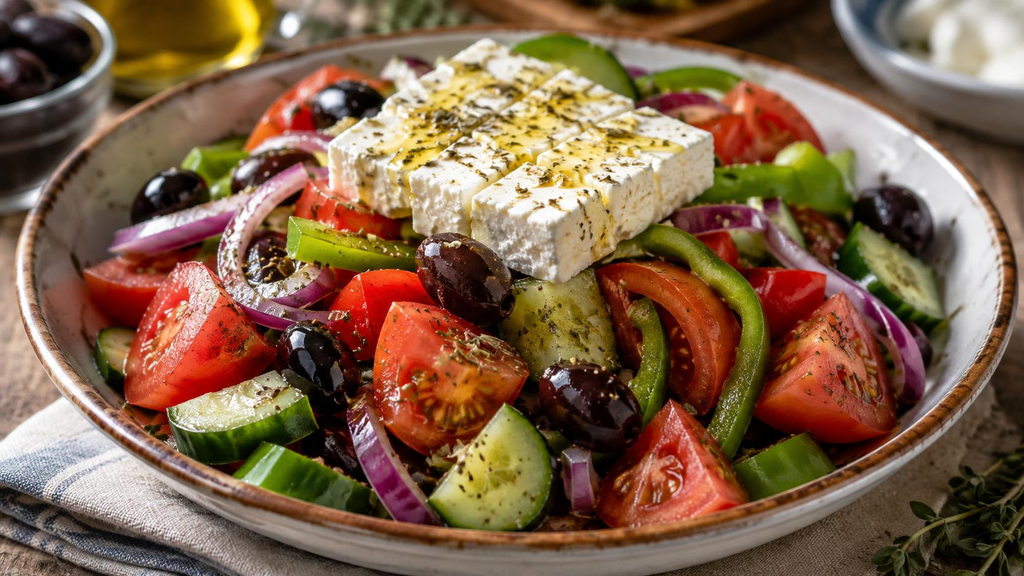
Greek salad, traditionally called Horiatiki, has a recognizable combination of chunky vegetables, olives, feta, olive oil, and oregano. “Mediterranean salad” is a broader description covering many regional recipes, including Greek salad itself. The useful comparison is therefore between traditional Horiatiki and other Mediterranean salads—not two entirely separate categories. (en.wikipedia.org)
| Aspect | Traditional Greek Salad: Horiatiki | Other Mediterranean Salads |
| Main ingredients | Tomatoes, cucumber, onion, olives, feta, olive oil, and oregano; green pepper is also common. | Ingredients vary by recipe and may include vegetables, beans, chickpeas, herbs, or grains. |
| Cheese | Feta is characteristic of the traditional preparation. | Some recipes include cheese; others contain none. |
| Leafy greens | Usually contains no lettuce. | May include leafy greens or herbs, but neither is required in every recipe. |
| Protein | Feta supplies some protein; meat and legumes are not standard ingredients. | Protein sources vary and may include legumes, cheese, fish, or meat. |
| Carbohydrates and grains | Usually contains no added grains, but its ingredients still provide carbohydrates. | Some recipes include grains or bread; others are primarily vegetables. |
| Flavor | Fresh and savory, with saltiness from feta and olives. | Depends on the ingredients and dressing; flavors may be herby, citrusy, earthy, or spicy. |
| Dressing | Olive oil and oregano are typical; vinegar or lemon juice may appear in variations. | Dressings vary by recipe rather than following one Mediterranean formula. |
| Presentation | Usually served with chunky vegetables and feta placed on top or in large pieces. | Ingredients may be finely chopped, layered, or tossed. |
Sources for the comparison: traditional Greek salad ingredients and variations, Mediterranean salad examples, dairy protein, and salad composition. (en.wikipedia.org)
For a Mediterranean-inspired meal with grains and legumes, try our chickpea and quinoa bowl
How to Compare Mediterranean Dishes on a Menu
Start with the dish name rather than the restaurant’s label. When comparing two menus, note the ingredients, cooking method, and accompaniments. This gives you three concrete details to compare without assuming that every item described as Mediterranean follows the same recipe.
Next, separate a traditional recipe from an adaptation. Horiatiki provides a useful reference: its familiar combination includes tomatoes, cucumber, onion, olives, feta, olive oil, and oregano. Use that combination as a starting point when reading another salad description. Note what has been added or changed instead of deciding its identity from one ingredient.
Finally, keep dietary balance separate from a dish’s cultural identity. The Mediterranean diet describes an overall eating pattern, rather than a guarantee attached to every regional recipe. When choosing a meal, ask two questions: “Which food tradition does this dish represent?” and “How does it fit with what I eat across the day?”
FAQs
Yes. Greek food is one part of Mediterranean cuisine. It shares ingredients with neighboring food traditions while retaining its own regional dishes and flavors. (en.wikipedia.org)
Mediterranean food belongs to many cultures, rather than one nationality. It includes Greek and Arab food traditions alongside others from Southern Europe, North Africa, and the eastern Mediterranean. (en.wikipedia.org)
Traditional Greek eating patterns helped shape the Mediterranean diet. However, the diet describes an overall eating pattern—not every dish served in a Greek restaurant.
A Mediterranean dietary pattern can support heart health. It emphasizes vegetables, whole grains, legumes, nuts, and olive oil, alongside fish and other foods. The balance of meals matters more than a Mediterranean label. (American Heart Association)
Common foods include olive oil, vegetables, whole grains, legumes, nuts, seeds, fish, and seafood. Recipes and ingredient combinations vary by country and region. (American Heart Association)
Traditional Greek salad usually combines tomatoes, cucumber, onion, olives, feta, olive oil, and oregano. Mediterranean salads cover a broader range of recipes; lettuce, grains, and cheese are optional rather than universal ingredients. (en.wikipedia.org)
Start with local restaurants that identify the regional dishes they serve, try recipes at home, or look for Mediterranean food festivals. Check actual menus and ingredients to find the food traditions you want to explore.