
When I skip a formal intro, I still keep the first idea in mind: pure simplicity. For me, caramelized fennel works best when the secret is a calm technique. A fresh fennel bulb is a fabulous, crisp vegetable with a clean taste.
Start with a cut that gives you thick slices and keeps the layers together. Use a tiny amount of olive oil and a light pinch of salt. As it cooks, the surface becomes soft and beautifully golden. That change is what makes it feel transformed from raw to rich.
I like to let the slices sit long enough for the edges to color deeply. This is the part that new cooks can master fast, because the method stays easy. The pan heat should be steady, so each piece turns into an exquisite bite. You get a gorgeous finish that fits almost any meal.
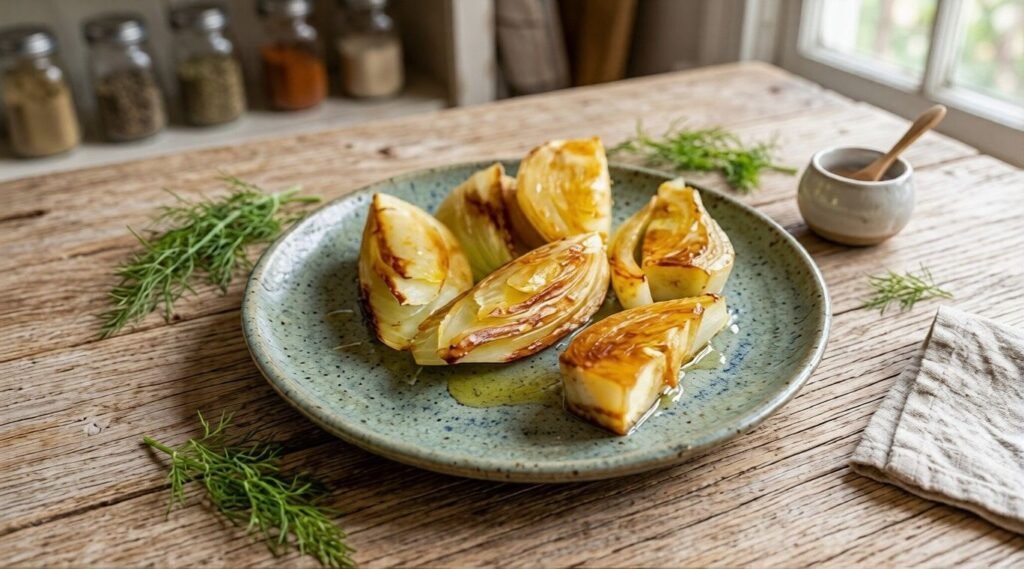
Serve it as a side dish while still warm, arranged on a gray plate if you like. That simple look makes the color stand out and keeps the focus on the golden surface. In my kitchen, this small step makes humble fennel feel special without extra work.
Ingredient Notes
For Ingredient Notes, I keep the base very clean and practical. You need fennel, sea salt, and olive oil, not a long list of ingredients. Its innate sweetness does the work, so onions do not need to step in. To caramelize fennel bulbs, sugar, syrup, and vinegar are not necessary.
In my kitchen, a little technique matters more than extra flavor tricks. For variation, I use additions that support and complement the anise flavor. A few simple variations in the recipe can add richness and visual interest. That keeps the dish focused, balanced, and true to the ingredient.
Fennel
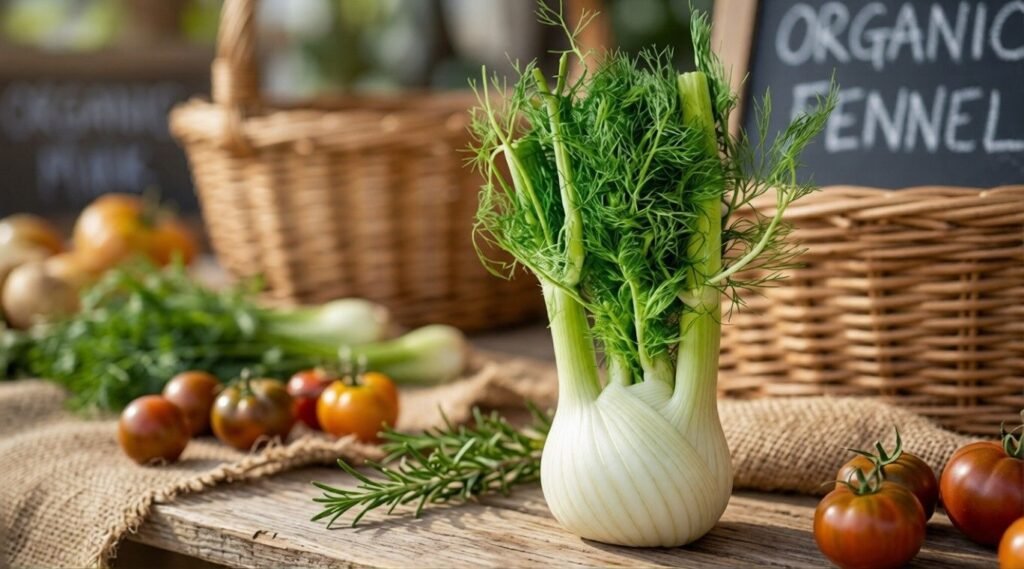
After that base is clear, the next focus is Fennel itself. A raw fennel bulb with long stalks and feathery fronds is a good sign. Because it keeps well in the refrigerator, it is easy to have on hand. That makes it perfect for a last-minute side dish on a busy day.
At the market, choose a plump, smooth, firm bulb with fresh green fronds. Whether large or small, it should feel heavy for its size. I always avoid anything lightweight, shriveled, or badly bruised. That one habit gives better texture and better browning in the pan.
You may also see it under another name. Some fresh domestic fennel is labeled anise in US grocery stores. That name is a misnomer, even if the aroma links both in the same family. What you want is the big green bulb with fronds, no matter the label.
If you keep learning, Fennel vs Anise and How to Cut Fennel are useful guides. In the kitchen, its crisp bite and crunchiness make it irresistible to munch. The odds of a large-scale snack attack, maybe half gone by stealth disappearance, are real.
How to Make Caramelized Fennel
I use a reverse process because it is the best method for cooking fennel. It brings out natural sweetness, subtle anise flavor, and beautiful color. For me, it gives better results than roasting or grilling. This is the part that turns a simple bulb into something special.
- Braise the slices covered first, and let them soften slowly.
This step builds moisture and keeps the texture calm and even.
In professional cooking, this is where the inside starts to relax.
It also sets up the next step without drying the fennel out. - Sear them uncovered after that, so they can caramelize well.
Now the heat works on the surface instead of steaming the pieces.
I like this stage because the flavor gets deeper without becoming heavy.
The outside picks up color while the center stays tender. - Let it rest for a moment, so the flavors can sweat and release in the pan.
That short pause helps the glossy cooking juices coat the fennel better.
It is a small move, but it changes the final texture a lot.
I learned long ago that patience here improves the whole dish. - Beautifully, stir everything together and serve right away.
The fennel should look rich, soft, and lightly glazed at this point.
Each layer will taste rounded, sweet, and gently aromatic.
That is why this method stays my favorite in both home and test kitchens.
Tips for Perfectly Caramelized Fennel
These are the 2 simple keys to obtaining beautifully caramelized fennel. From a cook’s view, patience and control do most of the work here. That is why the method stays reliable even in a busy home kitchen. The texture stays soft, and the surface develops a steady, even color.
- For an easy side dish, the best results come from following a few small tips.
The real difference starts in the first phase of cooking fennel with care.
I always start low and slow, because strong heat hurts the final color.
Keep the lid on, so its own natural juices are all that is needed to gently cook. - The next move is simple, and it matters more than many people think.
You do not need to stir or flip during this stage of cooking.
Just leave it alone until it turns nicely golden brown, but not burning.
I often tell new cooks to step away from the spatula and trust the pan.
Recommended Tools
- For this part, a stainless steel pan works very well for clean browning.
Use a small pan so the fennel slices fit nicely and snugly.
That helps prevent the pan from scorching during cooking.
An 8½ inch 21.5cm diameter skillet is good for one big fennel bulb and serves two. - I also keep tongs close, because they make the job easier and more precise.
It is nice to have absolute favorite tongs like Messermeister Locking 12″ tongs.
The perfect level of springiness makes them comfortable to use every time.
I have used them for many years and now keep a collection of three pairs.
Serving Tip
When I plate fennel, the color of the serving plate feels important enough to mention. It is one of those small details I always pay attention to in real kitchen work. It’s subtly beautiful, with an almost white-green tone that can look washed out on white plates.
A darker dish helps complement its quiet beauty with a stronger frame. I usually prefer medium tones like darker grays, as seen in photos, or soft blues. Warm earth colors also create a beautiful and appetizing backdrop for the fennel.
Recipe for Caramelized Fennel

With olive oil and salt, fennel quickly transforms. It turns into an exquisite golden side dish with very little effort. The secret is a calm technique, a few tips, and an easy rhythm. That is how you master beautifully caramelized fennel at home.
Ingredients
Use 1 large bulb of fennel for a simple batch. It may be labeled as anise in some markets, so check closely. You also need olive oil and fine sea salt, nothing more. I like this short list because it keeps the flavor clean and focused.
Instructions
For prep, trim the stems and base first. If the feathery fronds are in good shape, roughly chop and reserve them for garnish. You can peel the outer layer with a peeler or paring knife. If it is bruised, remove it completely, then halve the bulb.
Keep cutting from the top through the halves with the flat side face down. Make them around 3/4″ or 2cm thick for the best texture. That size helps them stay intact while still cooking evenly.
Braise
Place the fennel in a stainless steel skillet that is big enough to accommodate the slices. Keep them in one crowded layer over medium heat and add enough olive oil to barely coat the pan.
Now lower the heat to low, cover with a lid, and cook undisturbed for around 5 minutes. This helps the fennel release its own juices and cook without browning too soon. It should become softer but still firm, not weak or watery.
Caramelize
Next, uncover the pan and increase the heat to medium-high. Let it cook without stirring for around 5 minutes more as the bottom area browns. The space surrounding each slice should look golden brown. Do not take your eyes off it longer than needed.
If the heat is uneven, rotate the pan where it sits over different hotspots on the burner. That helps even out the caramelization without forcing the fennel. I use this step often in testing, because it gives steadier color.
Variations
For extra flavor, add fennel seeds and sprinkle a spoonful into the pan while cooking. You can also add some on top as a garnish for an extra touch of fennel flavor. If you want richness, try goat cheese, sheep’s ricotta salata, dry salted ricotta, or feta.
I also like grated Parmigiano Reggiano, especially when the dish is warm. It is great on top, and it melts in gently without taking over. A small amount works best, because fennel already has a soft sweetness. It also pairs well before reheating if you are making the dish ahead.
FAQ’s
Q. What is the easiest way to make caramelized fennel?
Ans: Slice the fennel thickly and cook it covered first. Then uncover it and let it turn golden in the pan.
Q. What ingredients are needed for caramelized fennel?
Ans: You only need fennel, olive oil, and sea salt. This keeps the recipe simple and clean in flavor.
Q. Why should fennel be cooked covered first?
Ans: Covering helps the fennel soften in its own juices. It also prevents it from browning too quickly at the start.
Q. How thick should fennel slices be for this recipe?
Ans: Cut the fennel into slices about 3/4 inch thick. This helps the layers stay together while cooking evenly.
Q. What type of pan is best for caramelized fennel?
Ans: A stainless steel skillet works very well for browning. It helps the fennel caramelize evenly without extra effort.
Q. How do you get fennel nicely caramelized without burning it?
Ans: Keep the heat steady and avoid stirring too much. Let the slices sit until they become nicely golden brown.
Q. Can caramelized fennel be served with other foods?
Ans: Yes, it makes a great warm side dish. It pairs easily with many simple meals.
Q. How do you choose a good fennel bulb?
Ans: Pick a bulb that feels firm, plump, and heavy. Fresh green fronds are also a good sign of quality.
Q. Are extra sweeteners needed to caramelize fennel?
Ans: No, fennel already has natural sweetness. You do not need sugar, syrup, or vinegar here.
Q. What are some variations for serving caramelized fennel?
Ans: You can add fennel seeds for extra flavor. Cheeses like feta or Parmesan also work very well.