
Nauman, Research Editor at Mediterranean Tastes
| Testing status: No human recipe-testing notes were supplied. Ingredient quantities, yield, timing, texture, flavor balance, substitutions, and storage performance must be verified before publication. |
What is the easiest way to make Mediterranean ground beef stir-fry? Brown the beef first, cook the vegetables in stages, return the beef to the skillet, and verify that it reaches 160°F (71°C) before adding lemon, parsley, and optional feta.
This Mediterranean ground beef stir-fry combines ground beef, red onion, bell pepper, zucchini, cherry tomatoes, garlic, oregano, cumin, and lemon in one skillet. Cooking the beef and vegetables in separate stages—without using a second pan—helps the meat brown while the vegetables stay tender instead of steaming in excess liquid.
This is a Mediterranean-inspired weeknight recipe, not a claim that the dish represents one traditional recipe from the region. The seasonings and serving options are editorial choices that still need to be confirmed through kitchen testing.
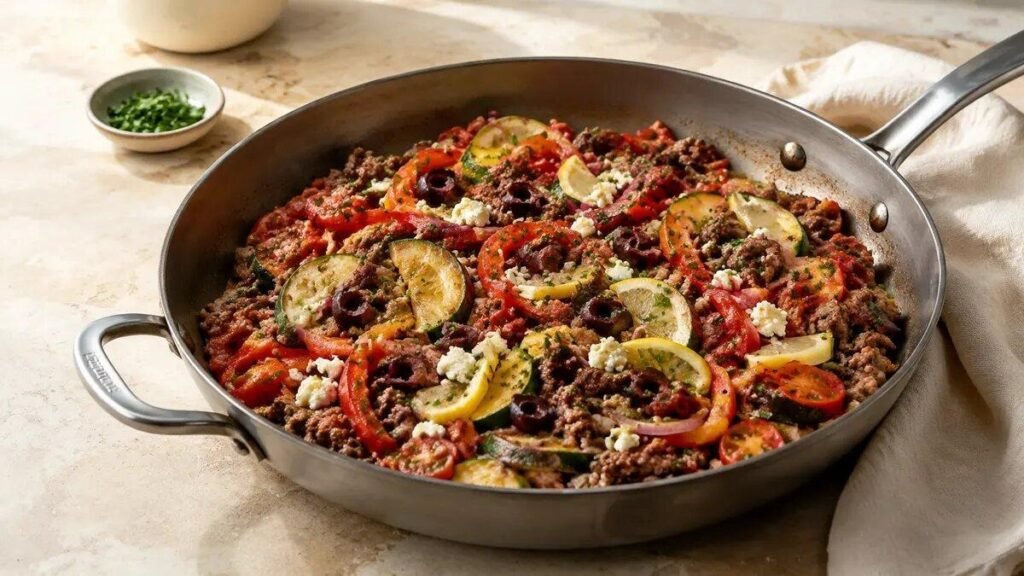
AI-generated illustrative image; it does not document recipe testing or the exact final result.
Recipe at a Glance
| Detail | Draft value to verify |
|---|---|
| Estimated yield | 4 servings |
| Estimated preparation time | 12 minutes |
| Estimated cooking time | 18–22 minutes |
| Estimated total time | 30–34 minutes |
| Pan | 12-inch/30-cm skillet |
| Safe minimum temperature | 160°F/71°C for ground beef |
| Main allergen | Milk, if feta is used |
The timing and yield are planning estimates. Pan material, burner strength, vegetable size, beef fat percentage, and ingredient temperature can change the result.
Ingredients
- 1 pound (454 g) lean ground beef, preferably 90% lean for this draft
- 1½ tablespoons (22 mL) extra-virgin olive oil, divided
- ½ medium red onion, thinly sliced, about 2¾ ounces (75 g)
- 1 large red bell pepper, cut into ½-inch strips, about 5 ounces (150 g)
- 1 small zucchini, cut into ¼-inch half-moons, about 6 ounces (170 g)
- 1 cup halved cherry tomatoes, about 5½ ounces (155 g)
- 3 garlic cloves, minced, about 2 teaspoons (9 g)
- 1 teaspoon dried oregano, about 1 g
- 1 teaspoon ground cumin, about 2 g
- ½ teaspoon smoked paprika, about 1 g
- ¾ teaspoon fine salt, about 4 g, divided; adjust only after tasting
- ¼ teaspoon black pepper, about 0.5 g
- 1½ tablespoons (22 mL) fresh lemon juice
- ¼ cup chopped flat-leaf parsley, about ½ ounce (15 g)
- ⅓ cup crumbled feta, about 1¾ ounces (50 g), optional
- ¼ cup sliced Kalamata olives, about 1¼ ounces (35 g), optional
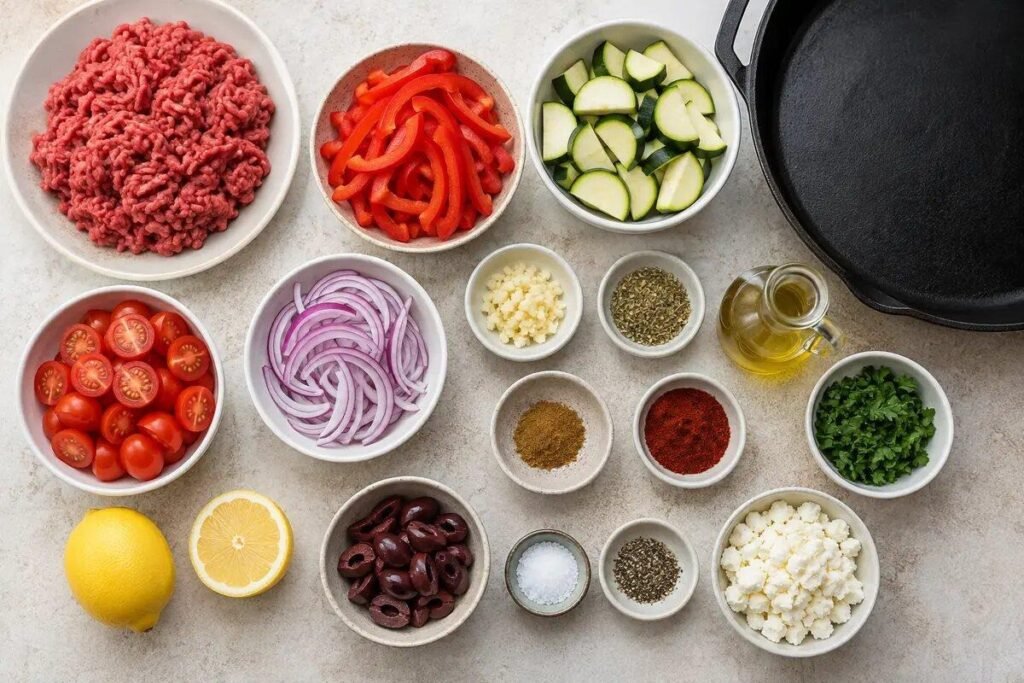
AI-generated illustrative ingredient layout. Check the written ingredient list for the quantities to test.
Why these ingredients are here
- Lean ground beef supplies the main savory base. A fattier blend can work, but it will usually need more draining.
- Red onion and bell pepper go into the pan before zucchini because they benefit from a slightly longer cooking time.
- Zucchini and cherry tomatoes add moisture, so they are cooked later and briefly.
- Oregano, cumin, and smoked paprika provide an herbal, warm, gently smoky seasoning base without a heavy sauce.
- Lemon and parsley are added after the main cooking stage so their fresh character is not lost to prolonged heat.
- Feta and olives are optional salty finishes. Add them only after tasting the cooked skillet.
If you are stocking flexible ingredients for this and other recipes, use the Mediterranean diet pantry list to plan olive oil, herbs, grains, legumes, and other useful staples.
Equipment
- 12-inch (30-cm) skillet with enough surface area for browning
- Heat-safe spatula or wooden spoon
- Chef’s knife and cutting board
- Measuring spoons and cups or a kitchen scale
- Clean plate or bowl for holding the cooked beef
- Food thermometer
- Shallow storage containers, if saving leftovers
Keep raw beef and its juices away from vegetables or garnishes that will not receive further cooking. Wash hands, utensils, and contact surfaces after handling the raw meat.
How to Make Mediterranean Ground Beef Stir-Fry
1. Prepare the ingredients
Slice the onion and bell pepper, cut the zucchini into even half-moons, halve the tomatoes, and mince the garlic. Pat visibly wet vegetables dry. Combine the oregano, cumin, paprika, ½ teaspoon salt, and black pepper in a small bowl.
Having everything ready before the pan heats is important because the cooking stages are short.
2. Brown the ground beef
Heat the skillet over medium-high heat. Add 1 teaspoon of the olive oil, followed by the ground beef. Spread the beef across the pan and leave it undisturbed for about 2 minutes to begin browning.
Break it into small crumbles and cook for an estimated 5–7 minutes more. Stir enough for even cooking, but not constantly. Add half of the spice mixture during the final minute.
Use a food thermometer to confirm that the beef reaches 160°F (71°C). FoodSafety.gov lists 160°F/71°C as the safe minimum internal temperature for ground meat. Color alone is not a reliable safety test; USDA FSIS explains that ground beef can brown before it reaches a safe temperature.
Transfer the cooked beef to a clean plate. If the pan contains a large amount of rendered fat, carefully remove the excess, leaving roughly 1 teaspoon for flavor and cooking.
3. Cook the firmer vegetables
Reduce the heat to medium. Add the remaining olive oil, onion, and bell pepper. Cook for an estimated 3–4 minutes, stirring occasionally, until the onion begins to soften and the pepper loses some raw firmness.
4. Add the zucchini
Add the zucchini in an even layer. Cook for an estimated 2–3 minutes. Stir only once or twice so the pieces have contact with the hot skillet. The goal for testing is tender zucchini that still holds its shape.
5. Add the garlic, remaining spices, and tomatoes
Stir in the garlic and the remaining spice mixture. Cook for about 30 seconds, just until fragrant. Add the tomatoes and cook for an estimated 2 minutes, until they begin to soften but have not released all their liquid.
6. Return the beef and finish
Return the beef and any collected juices to the skillet. Toss everything together and cook for 1–2 minutes, until the mixture is evenly hot. Check a dense portion of the beef mixture with a clean thermometer and confirm at least 160°F (71°C).
Remove the pan from the heat. Stir in the lemon juice and parsley. Taste before adding more salt, especially if using feta and olives. Sprinkle the optional feta and olives over the top just before serving.
Why Cooking Order Matters in Mediterranean Ground Beef Stir-Fry
This recipe uses a staged moisture-control method rather than putting every ingredient into the skillet at once. Ground beef gets the first contact with the hot pan so it has room to brown. Onion and bell pepper follow because they need more cooking time, while zucchini and tomatoes are added later because they release moisture more quickly.
The sequence also protects the ingredients that need less heat. Garlic is added shortly before the tomatoes to reduce the chance of scorching, while lemon juice and parsley go in after the main cooking stage so their fresher character remains noticeable. Optional feta and Kalamata olives come last because both can contribute salt, making it easier to taste the finished skillet before adjusting the seasoning.
A useful way to remember the method is brown → soften → control moisture → finish fresh. Brown the protein first, soften firmer vegetables next, delay wetter ingredients, and save fresh acidic or herbal ingredients for the end. This sequence is especially useful in a one-pan meal because excess moisture can turn browning into steaming.
Doneness and Food-Safety Check
Use time as a planning guide, not proof of doneness. Burner strength, pan thickness, and crumble size all affect cooking speed. The reliable check is a food thermometer showing at least 160°F (71°C) in the ground beef mixture.
Do not rely on the absence of pink color. USDA FSIS reports that ground beef may turn brown before reaching a safe temperature and may also remain pink after reaching it. If ground turkey or ground chicken is substituted, cook it to 165°F (74°C) according to the FoodSafety.gov temperature chart.
How to Prevent a Watery or Dry Skillet
| Problem | Likely cause | Adjustment to test |
|---|---|---|
| Beef steams instead of browning | Pan is too small, meat is stirred constantly, or the pan is not hot enough | Use a 12-inch skillet, spread the beef out, and let it sit briefly before breaking it up |
| Vegetables release too much water | Vegetables are wet, the pan is crowded, or tomatoes are added too early | Dry the vegetables, use staged cooking, and add tomatoes near the end |
| Zucchini becomes mushy | Pieces are too thin or cook too long | Use even ¼-inch half-moons and add them after onion and pepper |
| Garlic tastes bitter | It was added with the onion and cooked too long | Add garlic shortly before the tomatoes and cook it for about 30 seconds |
| Beef becomes dry | Extra-lean beef is overcooked or reheated too aggressively | Stop the first cooking stage once the beef reaches 160°F/71°C and reheat gently |
| Finished dish tastes overly salty | Feta, olives, and salt were all added before tasting | Reserve some salt and taste after the optional salty toppings are added |
Ingredient Substitutions and Timing Changes
| Original ingredient | Possible substitute | What changes |
|---|---|---|
| Ground beef | Ground lamb | Keep the same 160°F/71°C safety target; drain excess fat as needed |
| Ground beef | Ground turkey or chicken | Cook to 165°F/74°C; the leaner meat may need a little more oil and careful reheating |
| Red bell pepper | Yellow or orange bell pepper | Use the same quantity and estimated timing |
| Zucchini | Eggplant cut into ½-inch cubes | Expect a longer cooking time and possible need for more oil; test before publishing |
| Cherry tomatoes | ½ cup well-drained canned diced tomatoes | Use less than the fresh amount and drain well to control moisture |
| Parsley | Fresh dill or mint | Add off the heat; start with a smaller amount and test the flavor balance |
| Feta | Omit it | The dish becomes dairy-free if all other packaged ingredients are also checked for milk and cross-contact |
| Kalamata olives | Omit or replace with rinsed capers | Add sparingly after tasting because both are salty |
Any protein substitution changes the recipe enough to require its own temperature, time, moisture, and yield check.
Serving Ideas
- Spoon the stir-fry over brown rice, quinoa, or bulgur. For a plant-forward alternative, use the site’s Mediterranean bowl recipe as serving inspiration.
- Pair it with roasted Mediterranean potatoes and a simple cucumber salad.
- Fill a warm pita and add hummus, sliced cucumber, or a plain yogurt sauce.
- Serve a smaller portion over leafy greens and keep the warm mixture separate until mealtime.
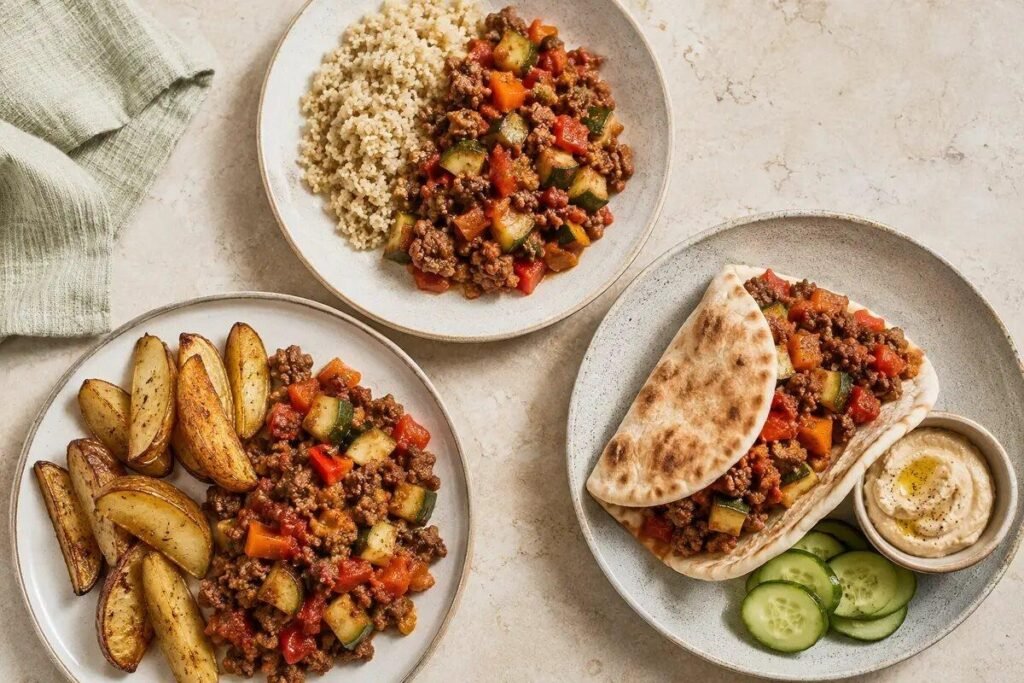
AI-generated illustrative serving ideas; portions and final appearance require testing.
Storage, Freezing, and Reheating
Refrigeration
Move leftovers into small, shallow containers and refrigerate them within 2 hours of cooking, or within 1 hour when the surrounding temperature is above 90°F/32°C. FoodSafety.gov advises using refrigerated leftovers within four days.
For this recipe, label the container with the cooking date and use it within 3–4 days. Store feta separately when practical so the beef and vegetables can be reheated without over-softening the cheese.
Freezing
No recipe-specific freezer test was supplied. If testing includes freezing, freeze the beef-and-vegetable mixture without feta in meal-size portions, thaw it in the refrigerator, and record the effect on zucchini and tomato texture. Set a quality window only after that test.
Reheating
Reheat only the portion needed. In a skillet, add a small splash of water and warm over medium-low heat, stirring occasionally. In a microwave, cover the food, stir midway, and check more than one spot. FoodSafety.gov recommends reheating leftovers to 165°F (74°C).
Allergens and Dietary Notes
- Milk: Feta contains milk. Omit it for a dairy-free version and verify the labels of every packaged ingredient.
- Gluten: The base ingredient list has no obvious gluten-containing ingredient, but spices, feta, olives, and serving products can vary. Check labels and cross-contact requirements if cooking for someone with celiac disease or a wheat allergy.
- Olives/capers: These can add substantial sodium. Taste before adding more salt.
- Substituted products: Plant-based grounds, seasoning blends, broth, sauces, and flatbreads may introduce soy, wheat, sesame, or other allergens.
Variations to Test
These are editorial test ideas, not verified recipe variations:
- Add 2 cups of baby spinach during the final minute and record the extra moisture.
- Add ½ cup rinsed chickpeas with the tomatoes and check whether additional seasoning is needed.
- Add ¼ teaspoon crushed red pepper for a mild spicy version.
- Omit feta and finish with an extra spoonful of chopped herbs for a dairy-free version.
Frequently Asked Questions
Is this a traditional Mediterranean dish?
No. This is a Mediterranean-inspired weeknight skillet using ingredients such as olive oil, oregano, lemon, vegetables, olives, and feta. It should not be labeled authentic to one country or regional tradition without credible cultural evidence.
What vegetables work best in Mediterranean ground beef stir-fry?
Quick-cooking vegetables such as bell pepper, zucchini, cherry tomatoes, spinach, mushrooms, and onion are practical choices. Add firmer vegetables first and wetter or leafy vegetables later so the skillet browns instead of steaming.
Can I make it without feta?
Yes. Feta is an optional finish, so the dish can be made without it. For a dairy-free version, also check packaged spices, olives, and serving products for milk ingredients and relevant cross-contact warnings.
Can I use ground turkey instead of ground beef?
Yes, but the timing and moisture may change. Ground turkey and chicken must reach 165°F/74°C, while ground beef must reach 160°F/71°C, according to FoodSafety.gov.
Why did my ground beef stir-fry turn watery?
Common causes include a crowded or insufficiently hot pan, wet vegetables, constant stirring, and adding tomatoes too early. Brown the beef first, dry the vegetables, and cook onion, pepper, zucchini, and tomatoes in stages.
How do I know when the ground beef is safely cooked?
Check the mixture with a food thermometer and confirm at least 160°F/71°C. Do not rely on color alone; USDA FSIS notes that ground beef can brown before reaching a safe internal temperature.
Can Mediterranean ground beef stir-fry be frozen?
It can be evaluated for freezing, but this draft has not been freezer-tested. Freeze without feta, thaw in the refrigerator, reheat to 165°F/74°C, and confirm whether the zucchini and tomatoes retain acceptable texture.
Can I chop the vegetables ahead of time?
Yes. Onion and bell pepper can be prepared ahead and refrigerated in covered containers. Keep tomatoes and cut zucchini dry, and store raw beef separately to reduce cross-contamination and excess moisture in the skillet.